

On 28 September the 2026 World Design Cities Conference (WDCC 2026) opened in Shanghai. As a university that has helped organize the event for five consecutive years, Donghua University (DHU) presented a series of sessions under the theme 'New Gravitational Pull of Fashion: Super Fashion and Future Innovation', including a main forum, an avant-garde fashion show and a thematic exhibition, showcasing its work in empowering industry, enriching culture and reshaping everyday life through design.
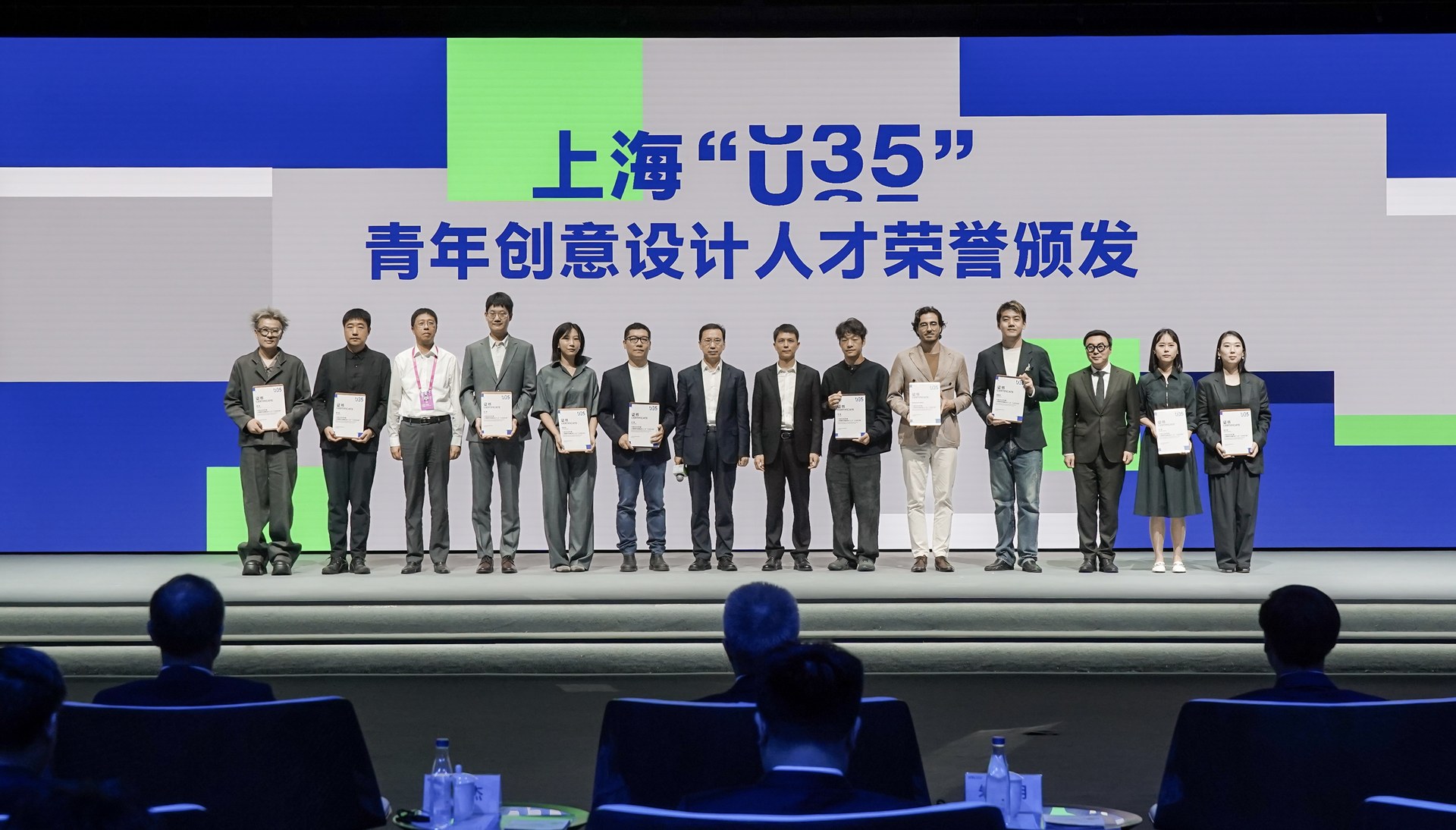
President Xiang Yanxun attended the opening ceremony and presented the 2026 Shanghai 'U35' Young Creative Design Talent awards. Open to outstanding designers under 35, U35 is a Shanghai platform for discovering a new generation of creative talent.
Running alongside the opening ceremony, DHU's 'New Gravitational Pull of Fashion: Super Fashion and Future Innovation' exhibition focused on three directions — industrial upgrading, intangible cultural heritage and digital-intelligent public wellbeing — and brought together more than 20 innovative projects from multidisciplinary teams across the university, combining research technology, traditional Eastern aesthetics and digital creativity.
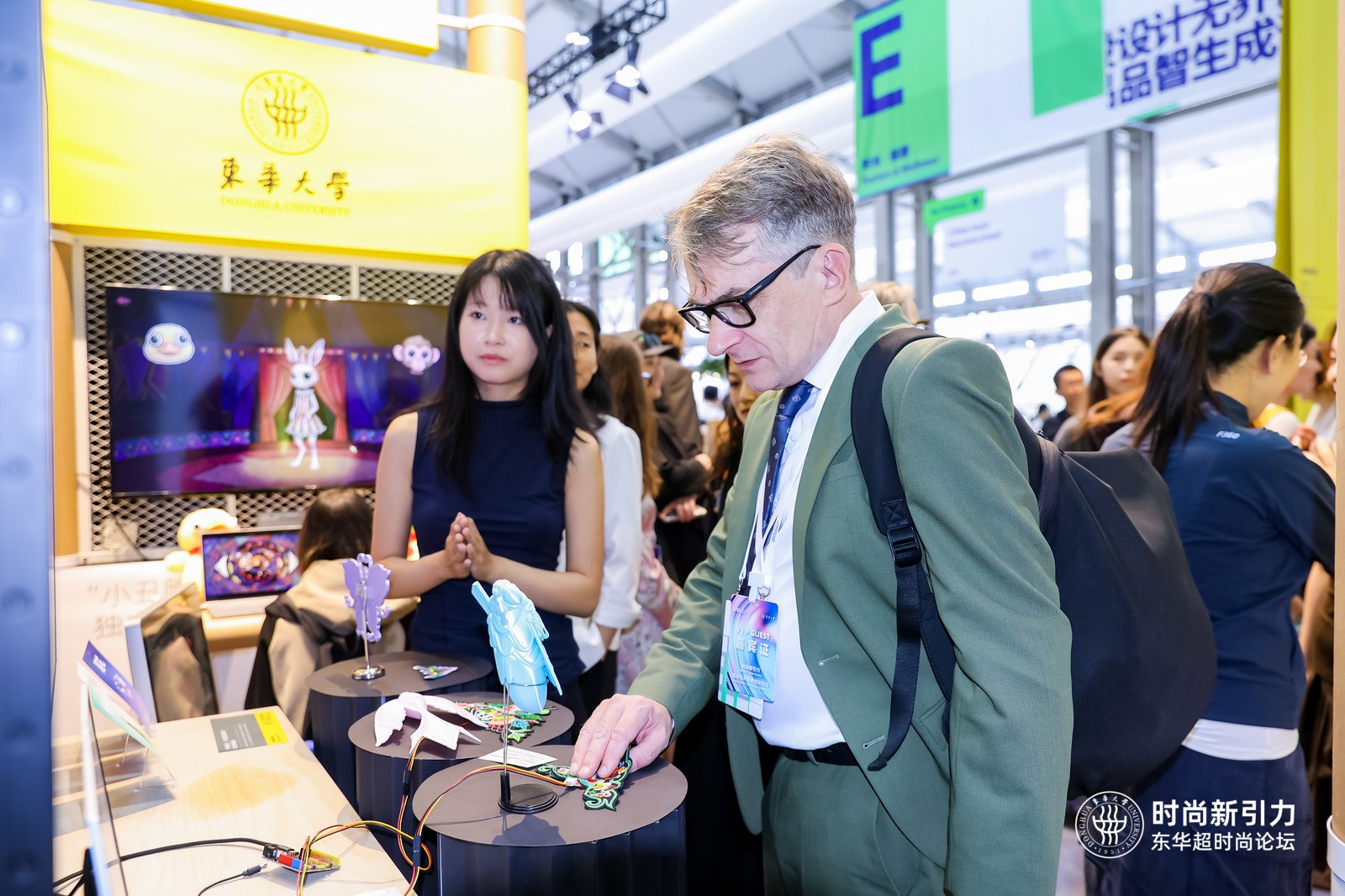
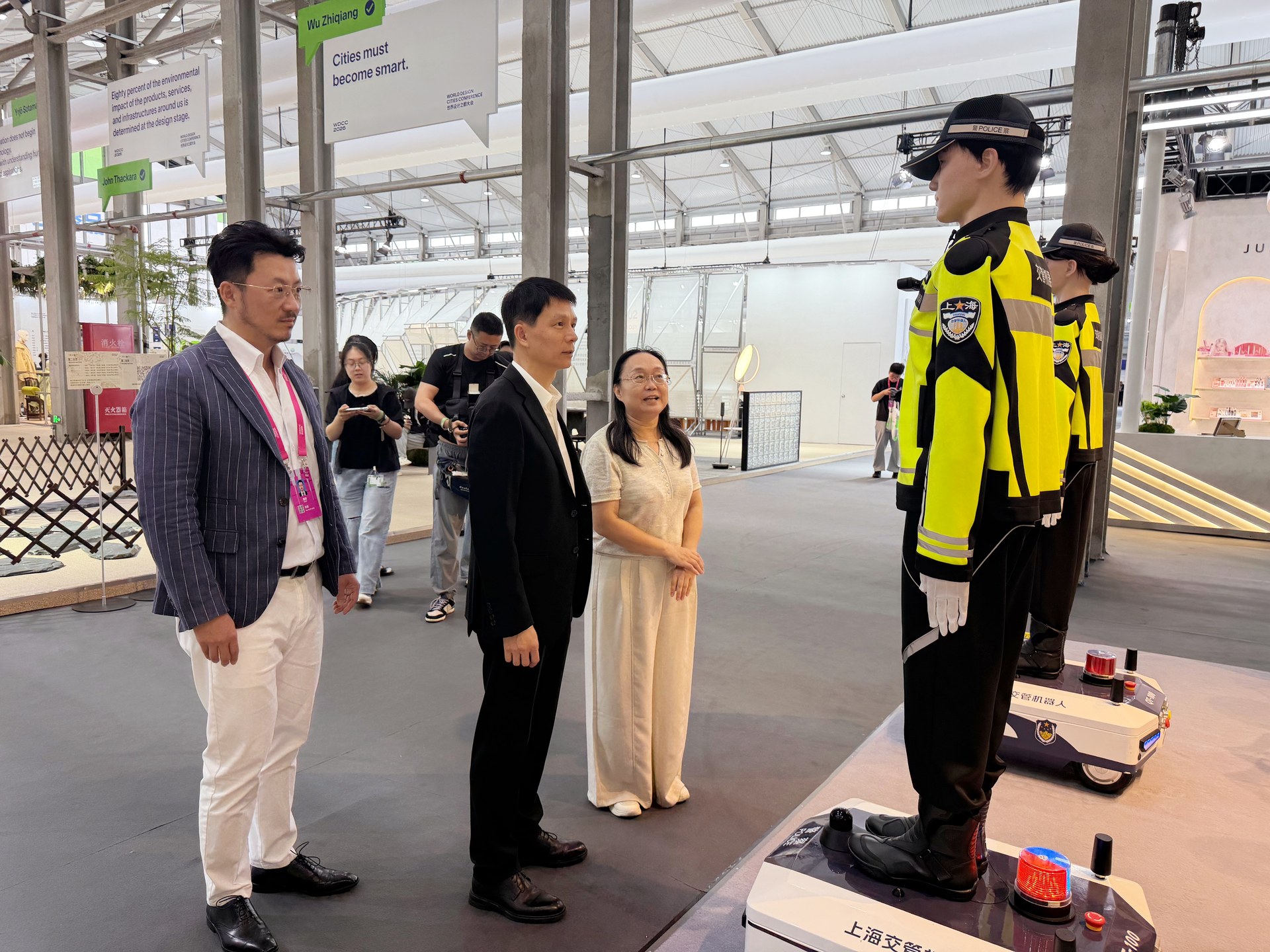
The exhibits combined practical function with artistic appeal. They included 'techno-couture' uniforms designed for traffic-management assistance robots, blending urban service functions with modern aesthetics, alongside a digital-twin protective clothing platform, an aesthetic miniature silent olfactory display device and an AIGC platform for intelligent craft and art creation. A heritage-inspired project, 'Mirror of the East', used real-time AI audio-visual interaction to turn the sound of the pipa, a traditional Chinese instrument, into flowing imagery, rendering music as woven pictures.
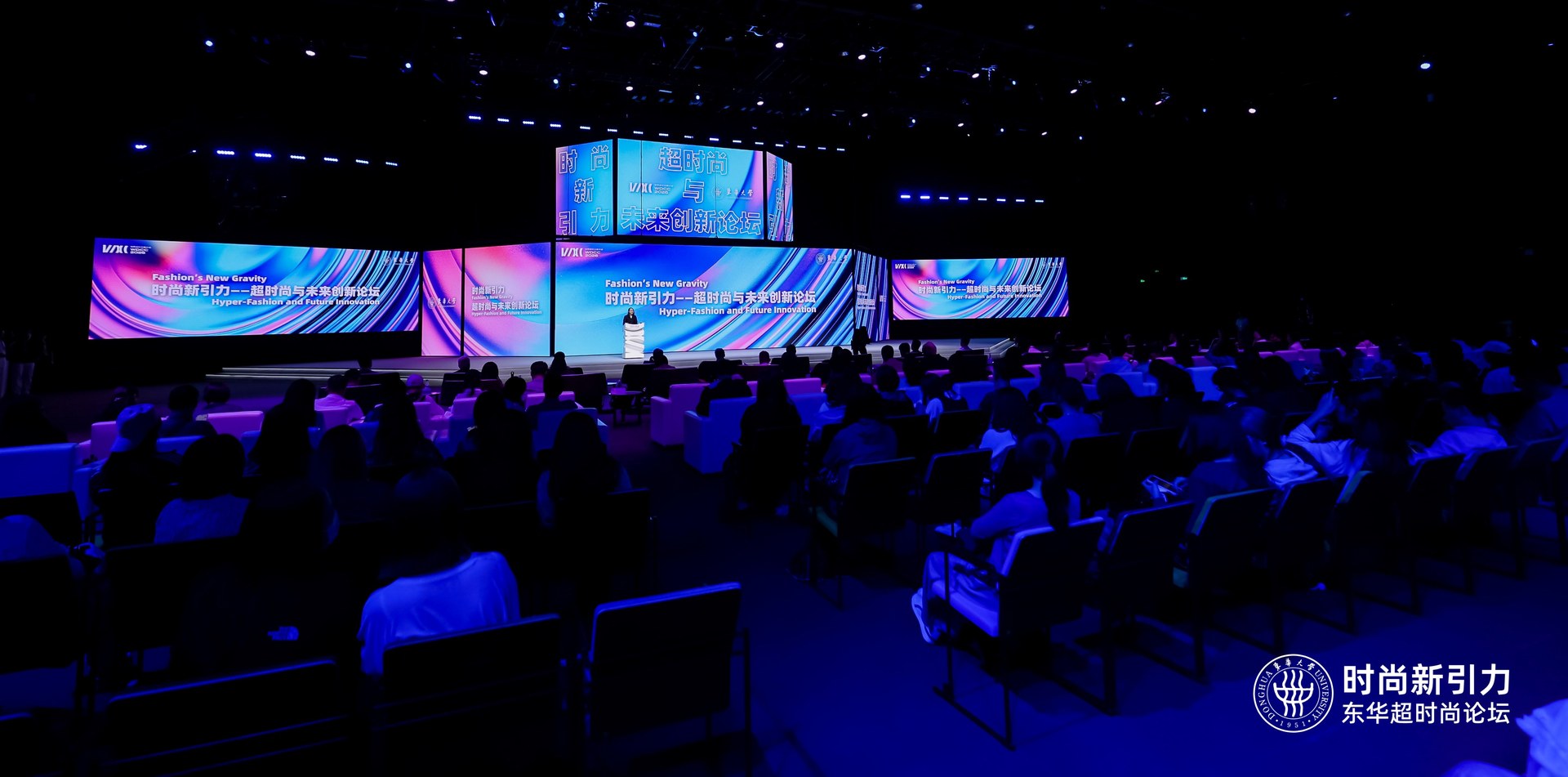
On the afternoon of 30 September, the 'New Gravitational Pull of Fashion: Super Fashion and Future Innovation Forum', a flagship event of WDCC 2026, was held at the main venue in Huangpu District. Hosted by DHU and organized by its College of Fashion and Design, the forum brought together leaders of design schools and industry figures from China and abroad to discuss sustainable fashion and future innovation.
Speaking at the forum, DHU noted that in its 75-year history the university has developed distinctive strengths in textiles, materials, fashion and design and is an important force in fashion talent development, research and industry services in China. As digital intelligence advances and the fashion industry transforms, 'super fashion' is emerging as a new paradigm for the sector. The university will focus on frontier directions, build a benchmark for integrated Chinese-international design education, and advance international collaboration between academia and industry.
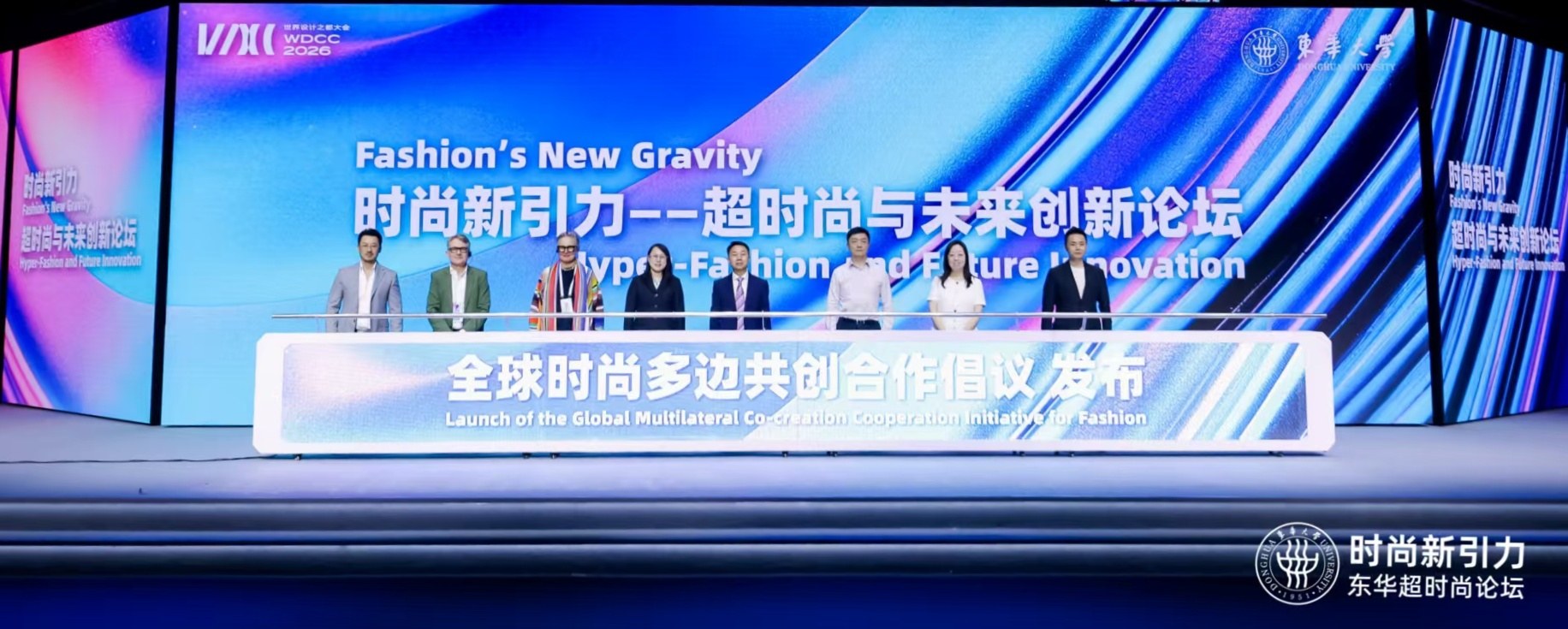
The forum also launched the Global Fashion Design Multilateral Co-creation Initiative, which calls for connecting global trends and expanding the boundaries of design, pooling fashion resources and building co-creation networks, and responding to shared challenges through sustainable innovation.
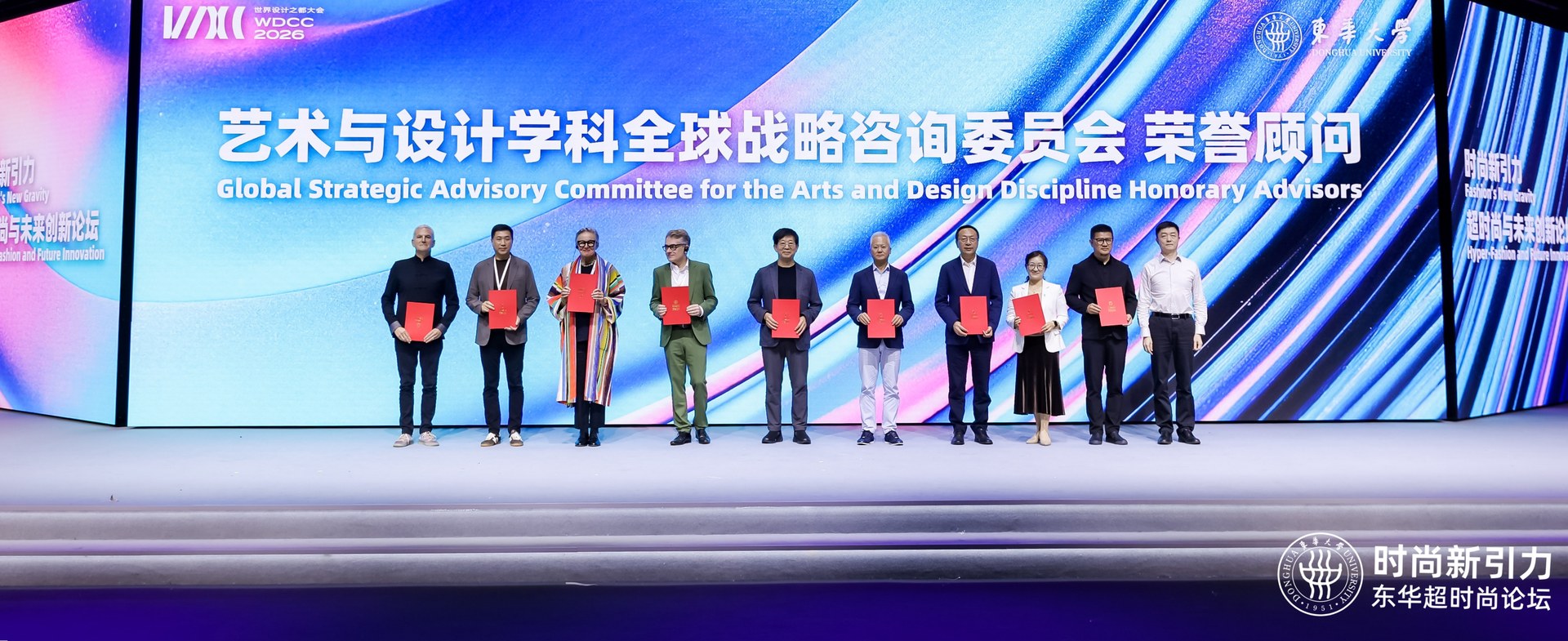
Vice President Chen Ge presented honorary advisor certificates to scholars from universities in China and abroad on the Global Strategic Advisory Committee for Art and Design.
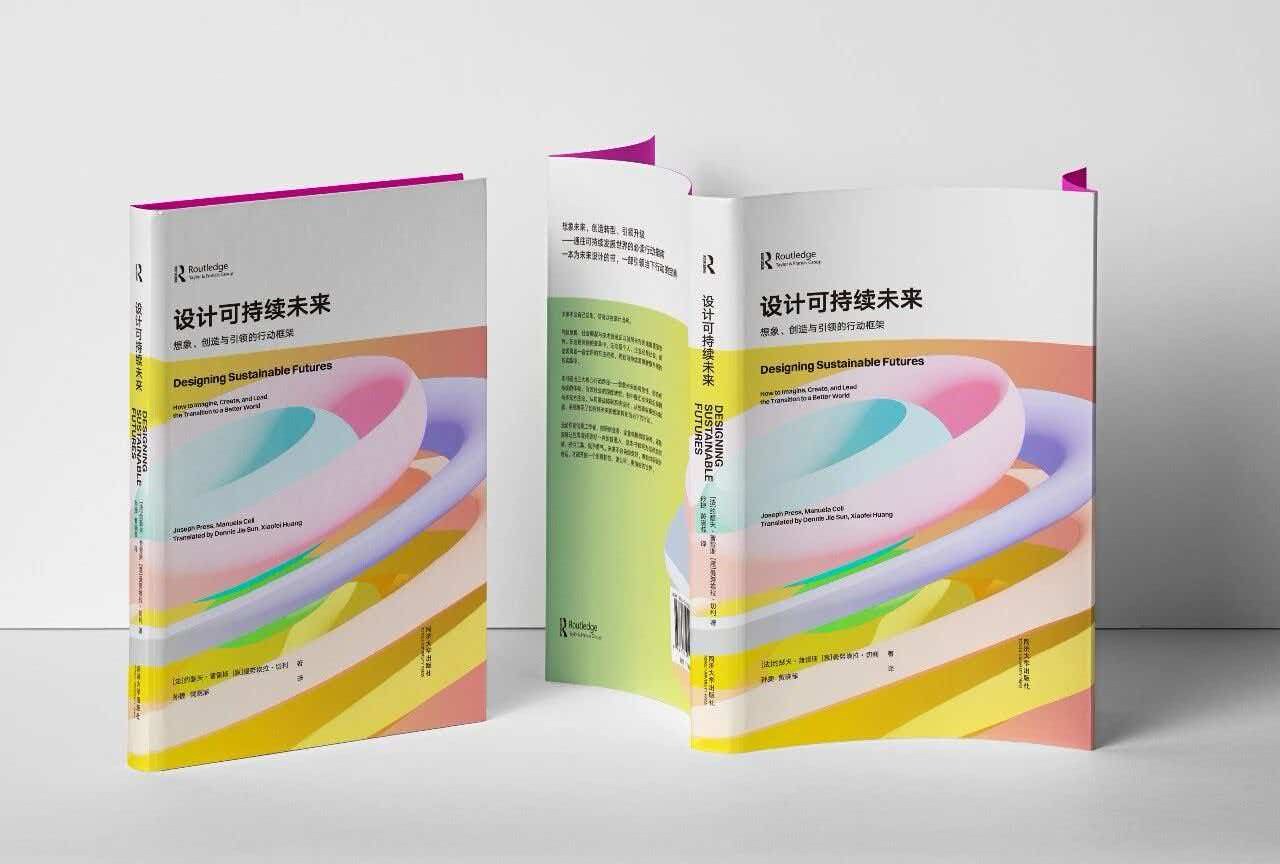
The book Designing a Sustainable Future was launched globally, with Chen Yuguang, chairman of Tongji University Press, Professor Sun Jie, Dean of the College of Fashion and Design, and Joseph Press, a futurist, design-driven transformation expert and MIT PhD, jointly unveiling the publication.
Three leading scholars in education took the stage to share perspectives on cross-cultural fashion innovation, sustainable urban transformation and AI-driven reform of design education. Helena Hyvönen, former dean of the School of Arts, Design and Architecture at Aalto University in Finland and a distinguished professor at the China Academy of Art, drew on Nordic design experience to explore how fashion and textiles can cross cultural boundaries and build bridges of understanding and sustainable innovation between civilizations. Troels Degn Johansson, professor at the Royal Danish Academy, used Copenhagen's urban practice as a case study to analyze how sustainability can drive both the fashion industry and urban transformation. Professor Yang Dongjiang of Tsinghua University examined how AI is reshaping design creation and considered future paths for design talent development and education.
The roundtable was moderated by Sun Jie. The keynote speakers were joined by Professor Wang Min of the Central Academy of Fine Arts, Professor Ma Jun of Tongji University, Wang Qian of WWF's Beijing office and Professor Zhou Hongtao of the University of Macau, among other academic and industry representatives, to discuss sustainable development and future innovation in the fashion industry from a global perspective, exchanging views on building industrial ecosystems, innovative design strategies and cross-border collaboration.
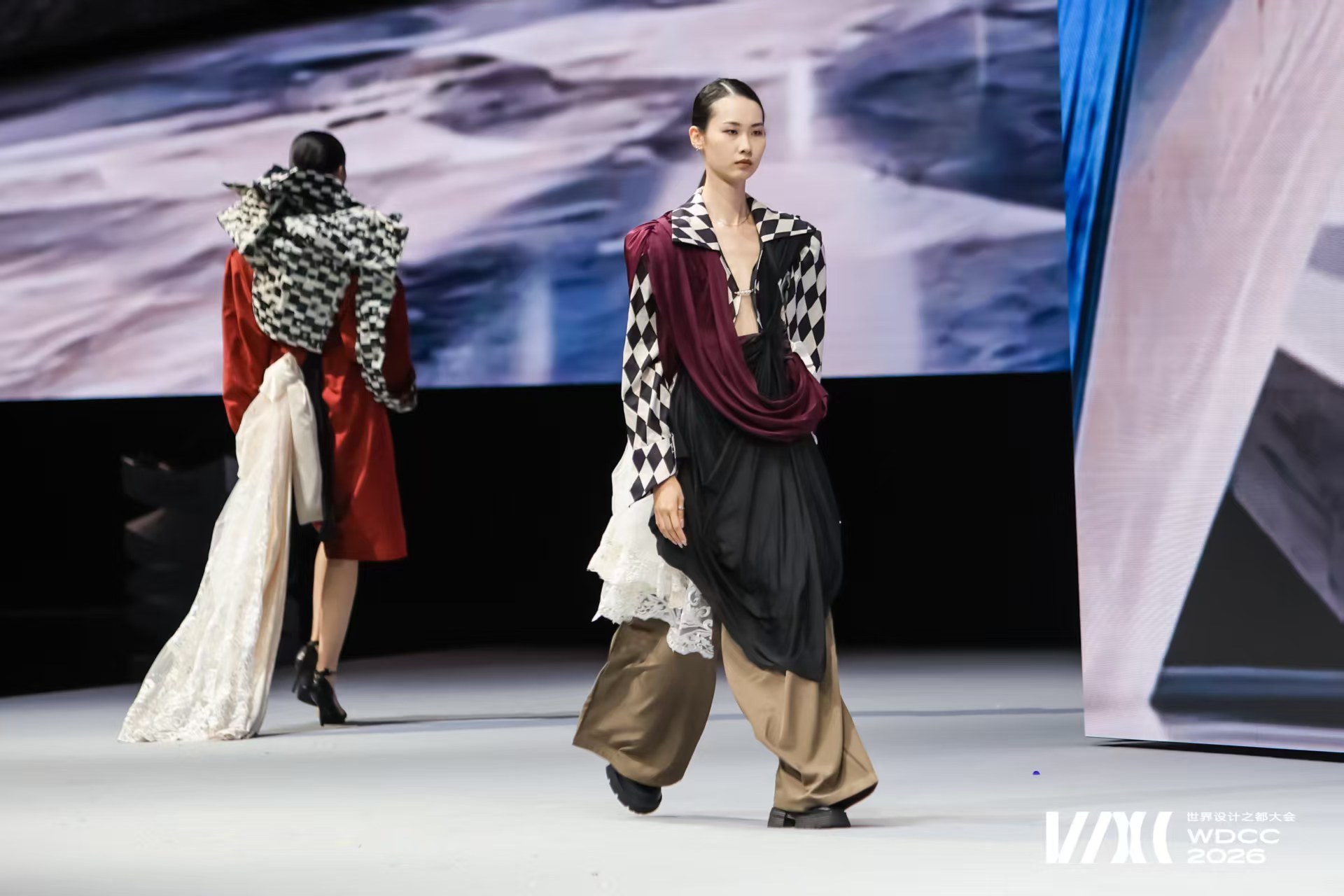
The 'Sense of Intelligence — Eastern Fashion' show closed the program. Taking five 'ripples' as its visual motif and 'computation and romance' as its creative concept, the show generated dynamic visuals through AI agents. Presented in three chapters — form, material and emotion — it featured 60 outfits created by 14 emerging designers.
A project by Professor Liu Hui's team at the College of Fashion and Design, 'Digital Elegance: AI-Empowered Protection, Documentation and Contemporary Interpretation of Chinese Dress Cultural Heritage', was selected as an outstanding practice case in UNESCO's 'When AI Meets Design' program.
The 'Shanghai Design 100+' global competition is jointly initiated by UNESCO and Shanghai. In the 2026 WDCC 'Shanghai Design 100+' selection, the 'CHINA COOL' circular fashion design project co-created by Li Jun's team at the College of Fashion and Design and COACH, a brand of Tapestry, was named one of the global top 100 design projects. The project focuses on circular fashion design, drawing on regenerated and reused materials.
Hosting these events is part of DHU's effort to advance its 'big design' discipline strategy. Drawing on Shanghai's world-class design platform, the university will continue to deliver design outcomes from teaching, research and industry collaboration and to strengthen its international influence in fashion.