

From 26 to 28 August, the Third International Conference on Technological Advancement in Embedded and Mobile Systems (ICTA-EMOS 2026) was held at Moi University in Eldoret, Kenya. As a key part of the conference, the 12th China–Africa International Forum on Textiles and Apparel and the China–Africa Cultural Exchange Forum (SAISTA & SACEF) took place on 27 August. Nearly 100 delegates from universities in China, Kenya and other countries, together with the United Nations Industrial Development Organization (UNIDO), gathered to discuss topics such as 'China–Africa Cooperation: Theory and Practice' and 'AI-Empowered Textile Technology', advancing exchanges and cooperation among Chinese and African universities, research institutions and industry.
A special session of ICTA-EMOS 2026, the forum was hosted by Donghua University (DHU) and Moi University under the guidance of the China National Textile and Apparel Council and UNIDO, co-organized by the World Textile University Alliance, and organized by DHU's College of Textiles and the Confucius Institute at Moi University. A DHU representative attended the opening ceremony and delivered remarks.
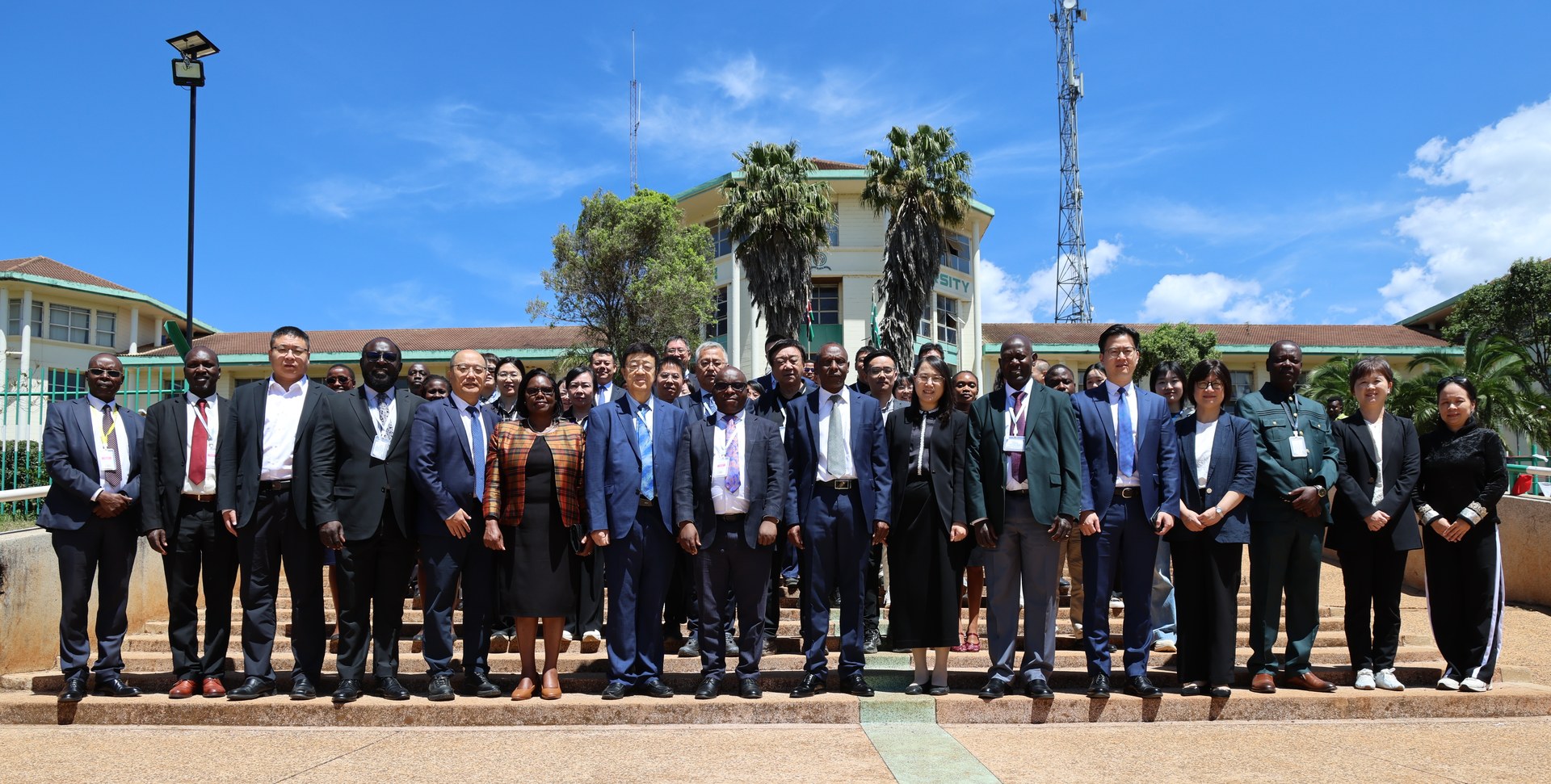
(Group photo of forum participants)
Several cooperation agreements were signed during the forum. DHU signed a memorandum of understanding with Kaimosi Friends University and an agreement with Moi University to continue developing the Confucius Institute and joint international laboratories. The China International Education Foundation, DHU and Moi University renewed their agreement on the Confucius Institute, and signed a four-party memorandum of understanding with the Open University of China, the Open University of Kenya and Moi University to jointly build the China–Africa Regional Center for Digital Education Cooperation and to develop distance education.
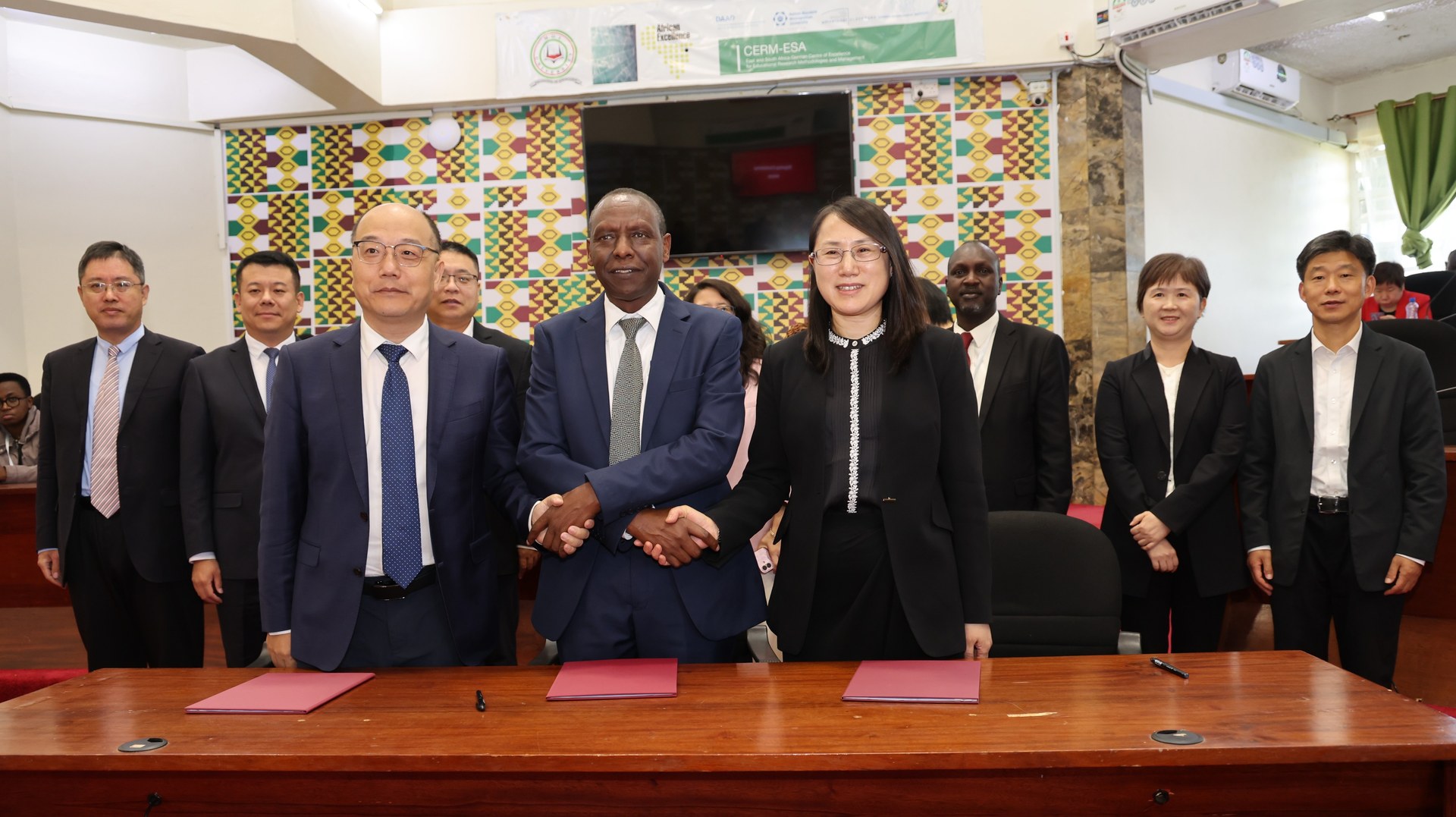
(Signing ceremony)
In the keynote session, Dr Yan Jinjiang, Officer-in-Charge of UNIDO's Rural Development, Agro-industry and Industrial Parks Division and Industrial Development Officer, spoke on transforming the textile and apparel industry for sustainable industrial development, while Professor Zeng Yongchun of DHU's College of Textiles discussed fiber filtration materials and functional masks.
In the afternoon, two parallel sessions were held: 'China–Africa Cooperation: Theory and Practice' and 'AI-Empowered Textile Technology'. The first addressed the transformation of the Global South, China–Kenya cultural exchange, AI governance and educational cooperation; the second focused on AI and China–Africa textile and apparel cooperation, carbon fiber composites, nonwoven materials, banana-stem fibers, smart manufacturing, digital printing and the recycling of textile waste.
In parallel, the council meeting of the Confucius Institute at Moi University was held on the university's main campus. Participants included Moi University Vice-Chancellor and Kenyan director of the Institute Mary Wahome, Chinese director of the Institute Li Lihua, and members of both delegations and Institute staff. They reviewed the Institute's annual work and financial statements, discussed plans for the coming year, and agreed to deepen cooperation between the two universities in Chinese-language teaching, academic exchange and faculty-student visits.
DHU representatives said the university will continue to build on platforms such as the Confucius Institute at Moi University and the China–Africa Regional Center for Digital Education Cooperation to advance talent development and joint laboratories, promote the application of research results, and strengthen exchanges among young scholars, students and artists.
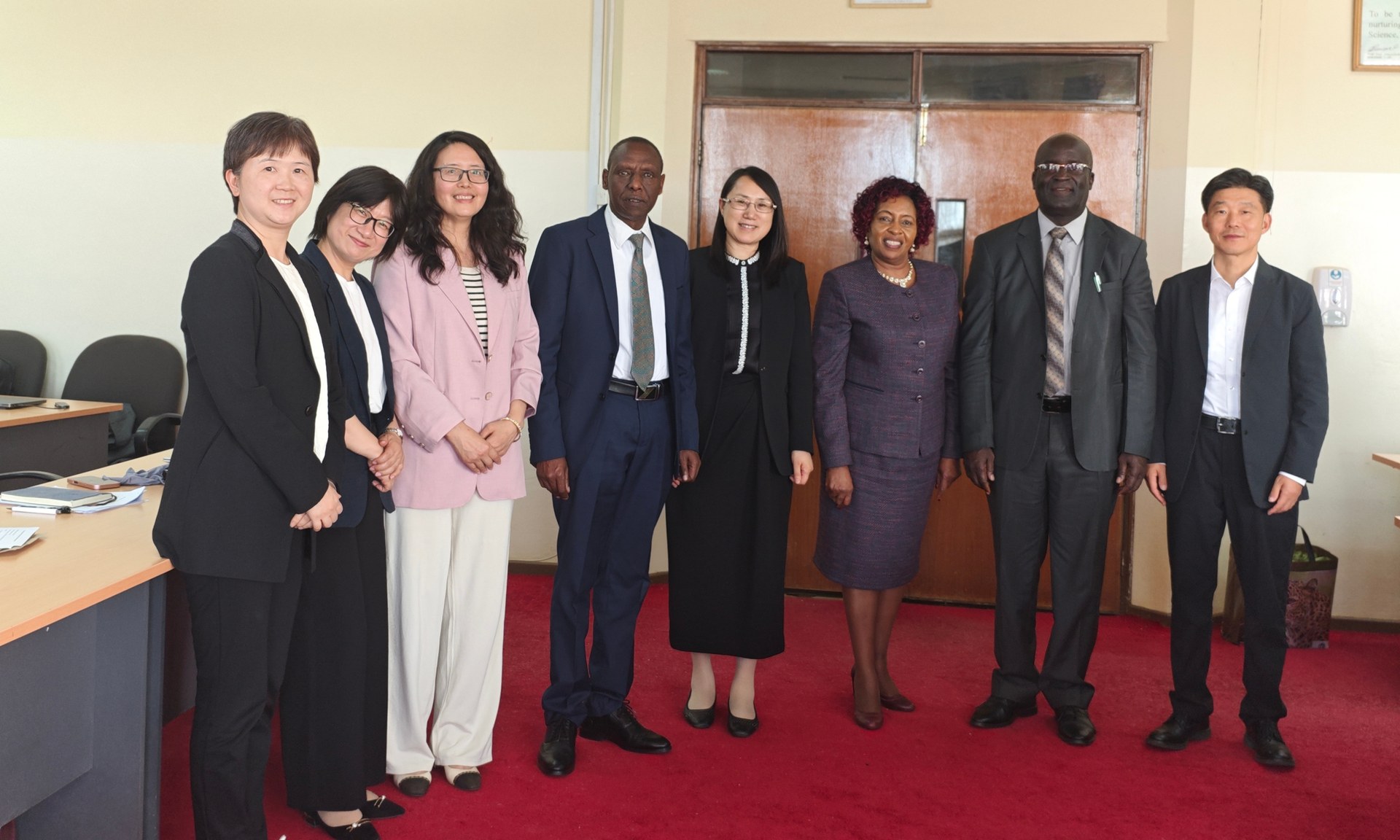
(Group photo of council meeting participants)
The forum deepened consensus among Chinese and African universities and institutions on research, engineering education, cultural exchange and sustainable development, and created a new platform for closer China–Africa higher education cooperation and the development of the textile industry.