

Recently, the research group led by Specially Appointed Researcher Weimin Xuan at the College of Chemistry and Chemical Engineering has achieved important progress in proton exchange membrane fuel cells. The related research, entitled "Cation-directed assembly and sequential functionalization enable superprotonic polyanion–organic frameworks for high-power fuel cells", was published in Nature Chemistry.
The commercial application of proton exchange membrane fuel cells (PEMFCs) has long been constrained by the difficulty of simultaneously achieving high proton conductivity and high stability in membrane materials. To address this bottleneck, the Xuan group proposed a supramolecular engineering strategy: using cationic building blocks with triangular symmetry, Keggin-type polyoxometalate (POM) anions are precisely anchored through electrostatic interactions and C–H···O hydrogen bonds, successfully constructing a series of polyanion-organic frameworks (POFs) with one-dimensionally ordered channels. These materials possess excellent chemical stability and structural flexibility, and protonated imidazole and alkyl sulfonic acid groups can be successively introduced through post-modification, thereby exhibiting excellent proton conduction performance. After incorporating the POFs as additives to modify composite proton exchange membranes, the fuel cell performance substantially surpasses that of commercial membranes, opening new avenues for the development of next-generation fuel cell membranes.
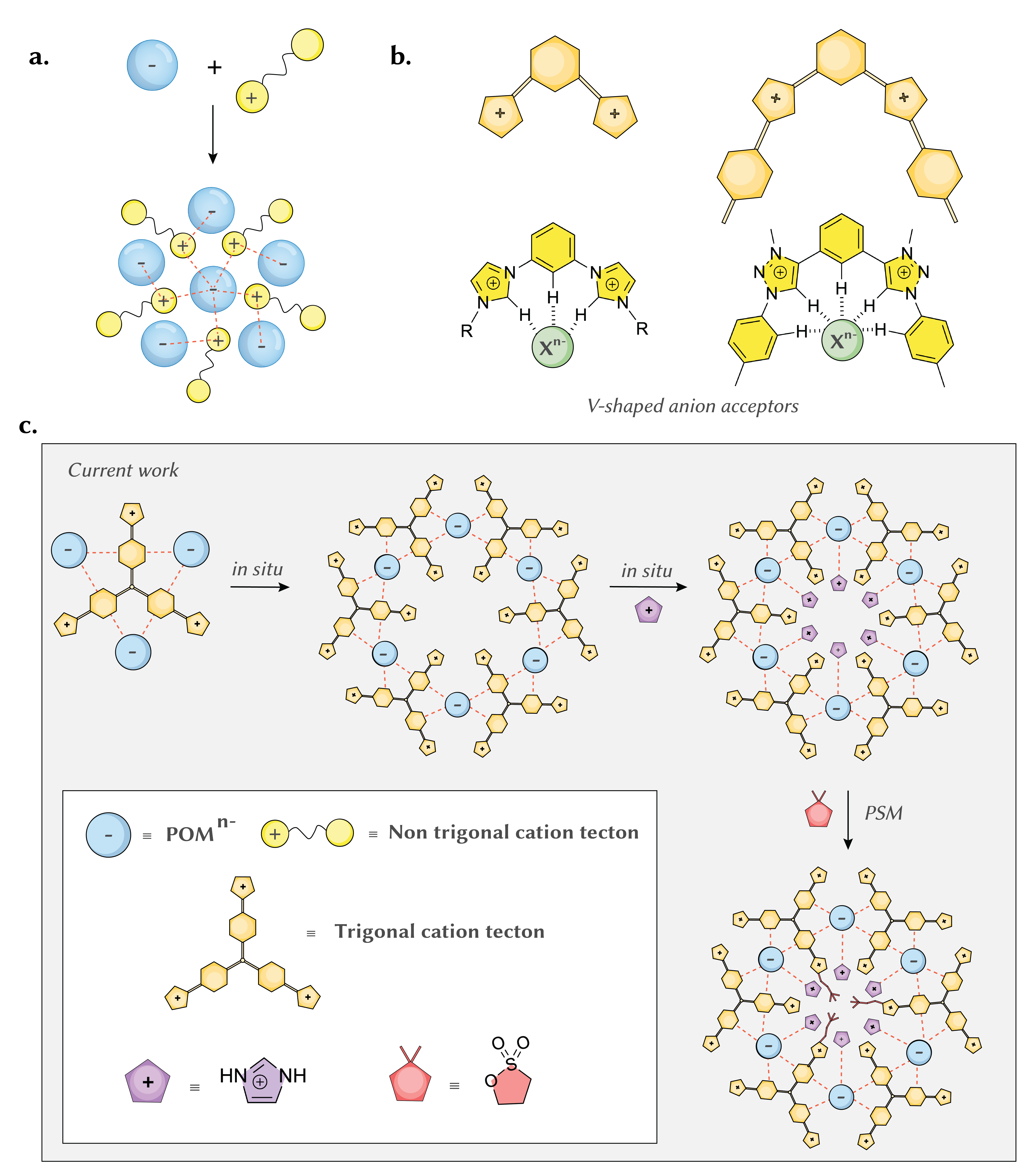
Figure 1. Schematic illustration of the synthesis and sequential functionalization of porous polyanion-organic frameworks (POFs).
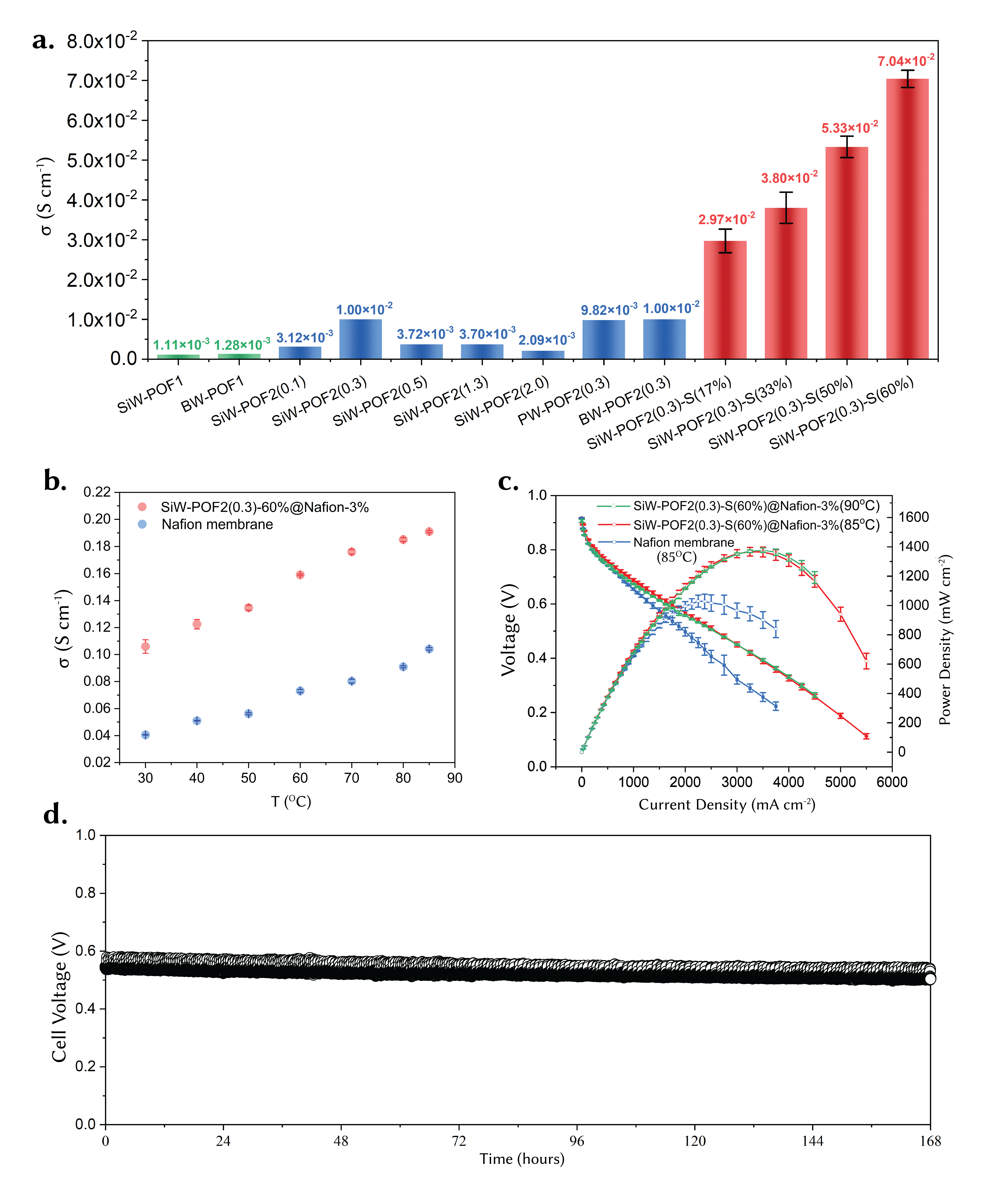
Figure 2. Proton conductivities of POFs and POF@Nafion composite membranes and fuel cell performance.
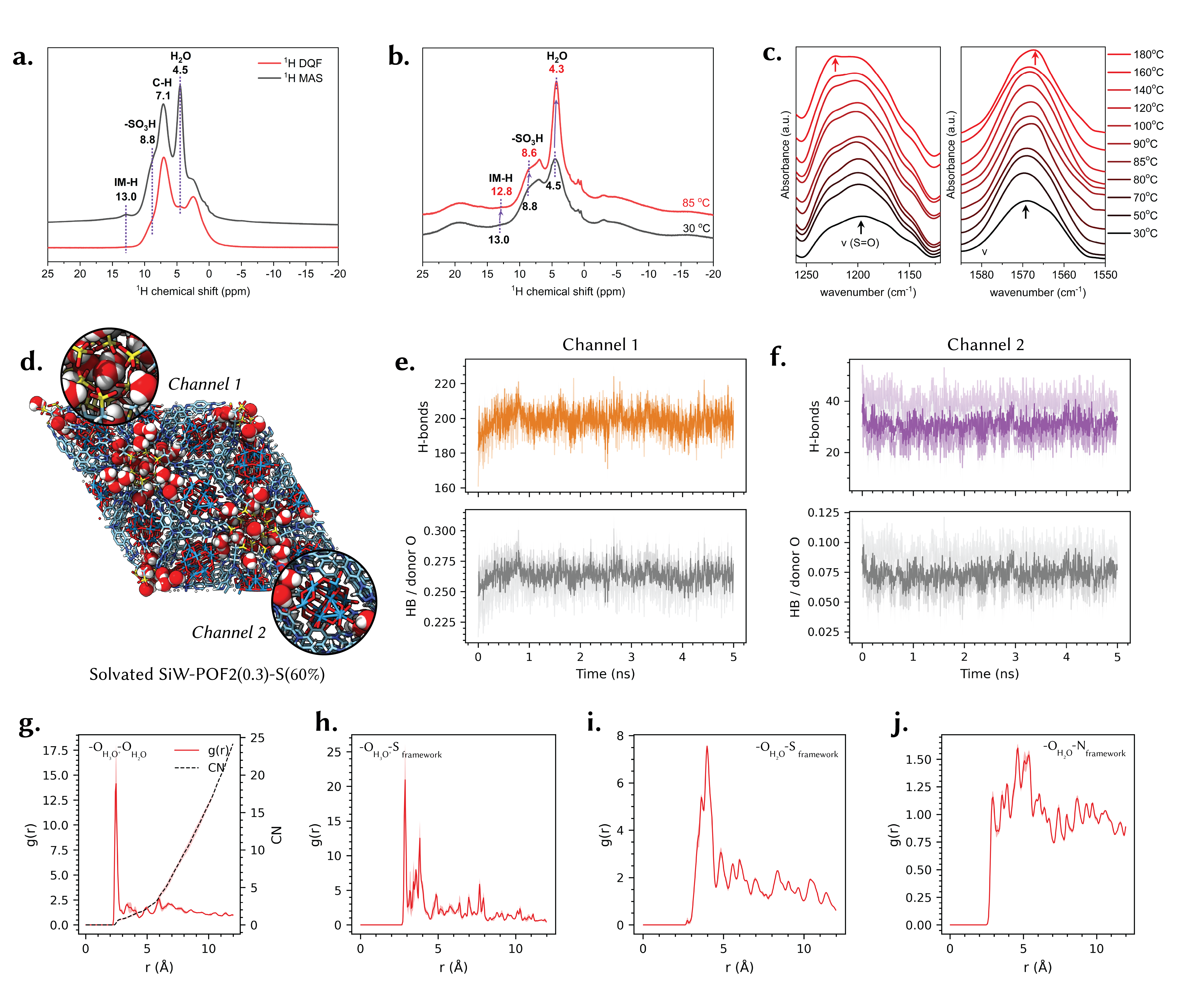
Figure 3. Study of the proton conduction mechanism of SiW-POF2(0.3)-S(60%).
Under 85 °C and 98% relative humidity, the sulfonated POF material SiW-POF2(0.3)-S(60%) achieves a proton conductivity of 7.04 × 10⁻² S cm⁻¹, comparable to that of commercial Nafion membranes. Arrhenius analysis indicates that its proton transport mechanism is a Grotthuss-type hopping mechanism, with an activation energy as low as 0.39 eV. Furthermore, after incorporating the material at 3 wt% into a Nafion matrix to prepare hybrid membranes, H₂–O₂ fuel cell tests achieve a maximum current density of 3400 mA cm⁻² and a peak power density of 1367 mW cm⁻², an increase of 133% over pure Nafion membranes. The composite membrane operated continuously for 168 h at 90–95 °C with a voltage decay rate of only 0.23 mV h⁻¹, demonstrating outstanding durability. Combining solid-state NMR, variable-temperature infrared spectroscopy, and molecular dynamics simulations, the research team revealed the microscopic mechanism of efficient proton conduction: the sulfonic acid groups construct a continuous percolating network containing approximately 200 hydrogen bonds within a specific channel (Channel 1), providing an efficient transport pathway for proton hopping; in contrast, the hydrogen-bonding network in the other channel (Channel 2) is discontinuous, supporting only local transport. This work breaks through the performance limits of traditional proton exchange membranes and provides a new paradigm for the design of highly proton-conductive porous materials.
Qixin Zhao, a PhD candidate at the College of Chemistry and Chemical Engineering, is the first author of the paper, with Bo Li of Northeast Normal University/Shanghai Institute of Organic Chemistry of the Chinese Academy of Sciences, Dhruv Menon of the University of Cambridge, and Chunmei Zhu of Donghua University as co-first authors. Specially Appointed Researcher Weimin Xuan is the corresponding author, with Professor Hongying Zang of Northeast Normal University and Professor David Fairen-Jimenez of the University of Cambridge as co-corresponding authors. Donghua University is the first corresponding affiliation. The testing platform of the College of Materials Science and Engineering of Donghua University and the Shanghai Synchrotron Radiation Facility provided technical support for the collection of crystal data.
Paper link: https://doi.org/10.1038/s41557-026-02169-8