

Recently, the research team led by Professor Jinli Qiao at the College of Environmental Science and Engineering of Donghua University has achieved important progress in constructing high-performance rechargeable zinc–air batteries via electrospinning technology. The related work, entitled "Scalable Electrospinning-Pyrolysis Fabrication of MOF-Derived Beaded Co/Co-Nx-C Nanofibers for High-Power and Long-Life Zn-Air Batteries", has been published in Advanced Functional Materials, an international journal in the field of materials science.
Zinc–air batteries are regarded as a highly promising next-generation energy storage technology owing to their high theoretical energy density and environmental friendliness. However, the sluggish kinetics of the oxygen reduction reaction (ORR) and oxygen evolution reaction (OER) at the air electrode severely restrict their practical application. For the first time, the research team introduced "intercluster spacing engineering" into the design of MOF-derived fiber electrodes, constructing a MOF-derived bead-chain-like Co/N-doped carbon nanofiber catalyst through an "electrospinning–pyrolysis" strategy, and achieving precise regulation of the catalytic active cluster spacing by tuning the ZIF-67 loading. The catalyst simultaneously contains metallic Co nanoparticles and Co-Nx active sites, which ensures a high active-site density while optimizing electron and mass transport, thereby significantly enhancing the bifunctional oxygen electrocatalytic performance. Combined with synchrotron radiation characterization and density functional theory (DFT) calculations, this work reveals that an appropriate cluster spacing can regulate the electronic coupling between metallic Co and Co-Nx active sites, optimize the adsorption behavior of oxygen intermediates, and thereby effectively promote the ORR/OER reaction kinetics.
The optimized Co/Co-Nx-C@CNF-1.5 catalyst exhibits excellent bifunctional catalytic activity (ΔE = 0.815 V). In particular, liquid zinc–air batteries assembled with this catalyst/electrode achieve an ultrahigh power density of 406.5 mW cm⁻², an energy density of 976 Wh kg⁻¹, and a long cycling life of up to 2143 h. Quasi-solid-state flexible devices also exhibit excellent power output and stability. This study provides new research ideas and a theoretical basis for the structural design of MOF-derived fiber electrodes and the development of high-performance zinc–air batteries.
PhD student Liyuan Guo is the first author of the paper, Professor Jinli Qiao is the corresponding author, and Donghua University is the first corresponding affiliation.
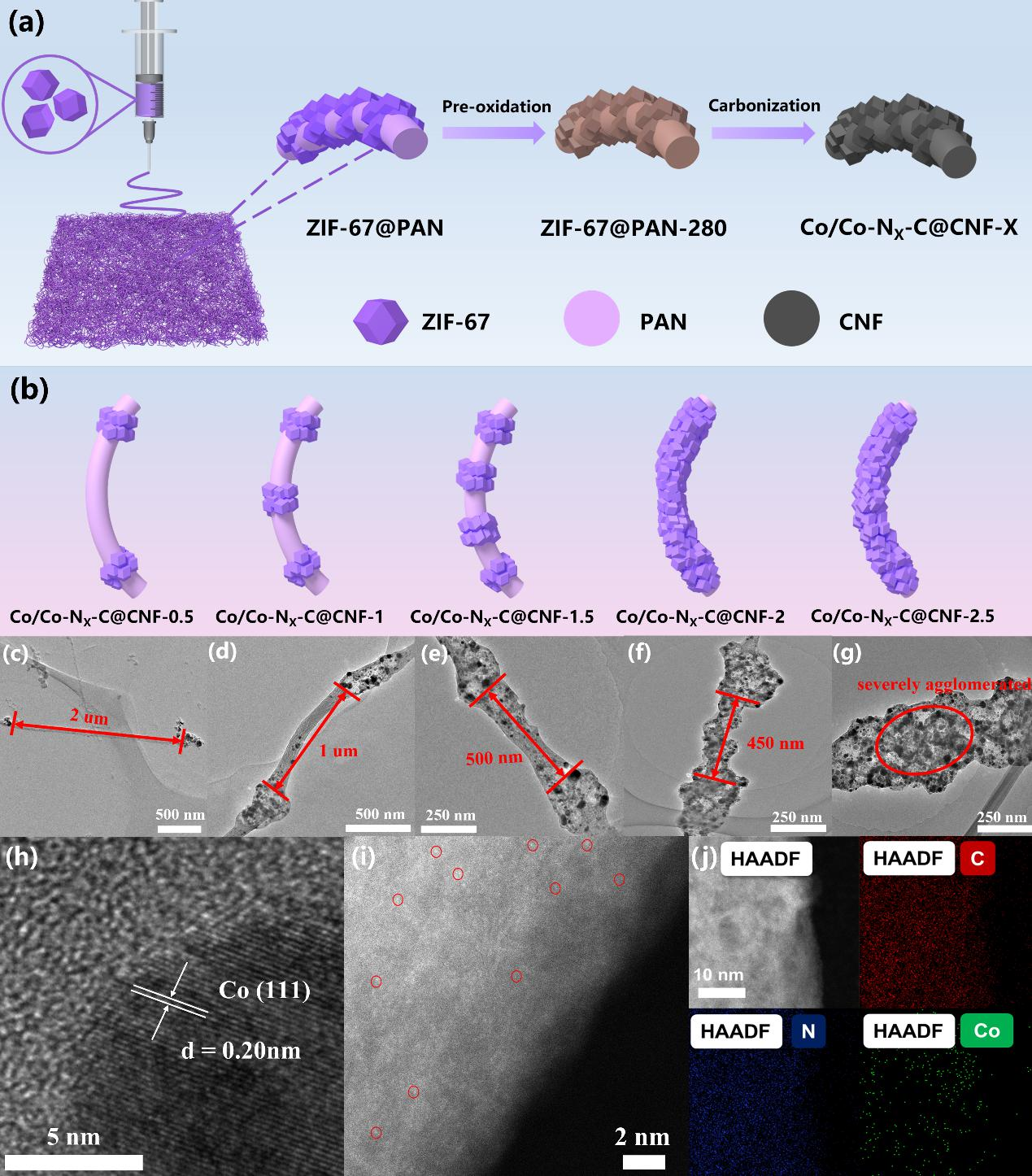
Figure 1. a) Schematic illustration of the synthesis process of Co/Co-Nx-C@CNF-X, b) schematic illustration of Co/Co-Nx-C@CNF-X (X = 0.5, 1, 1.5, 2, 2.5), c–g) corresponding transmission electron microscopy (TEM) images, h) high-resolution TEM (HR-TEM) image of Co/Co-Nx-C@CNF-1.5, i) high-angle annular dark-field scanning transmission electron microscopy (HAADF-STEM) image of Co/Co-Nx-C@CNF-1.5, j) corresponding elemental mapping.
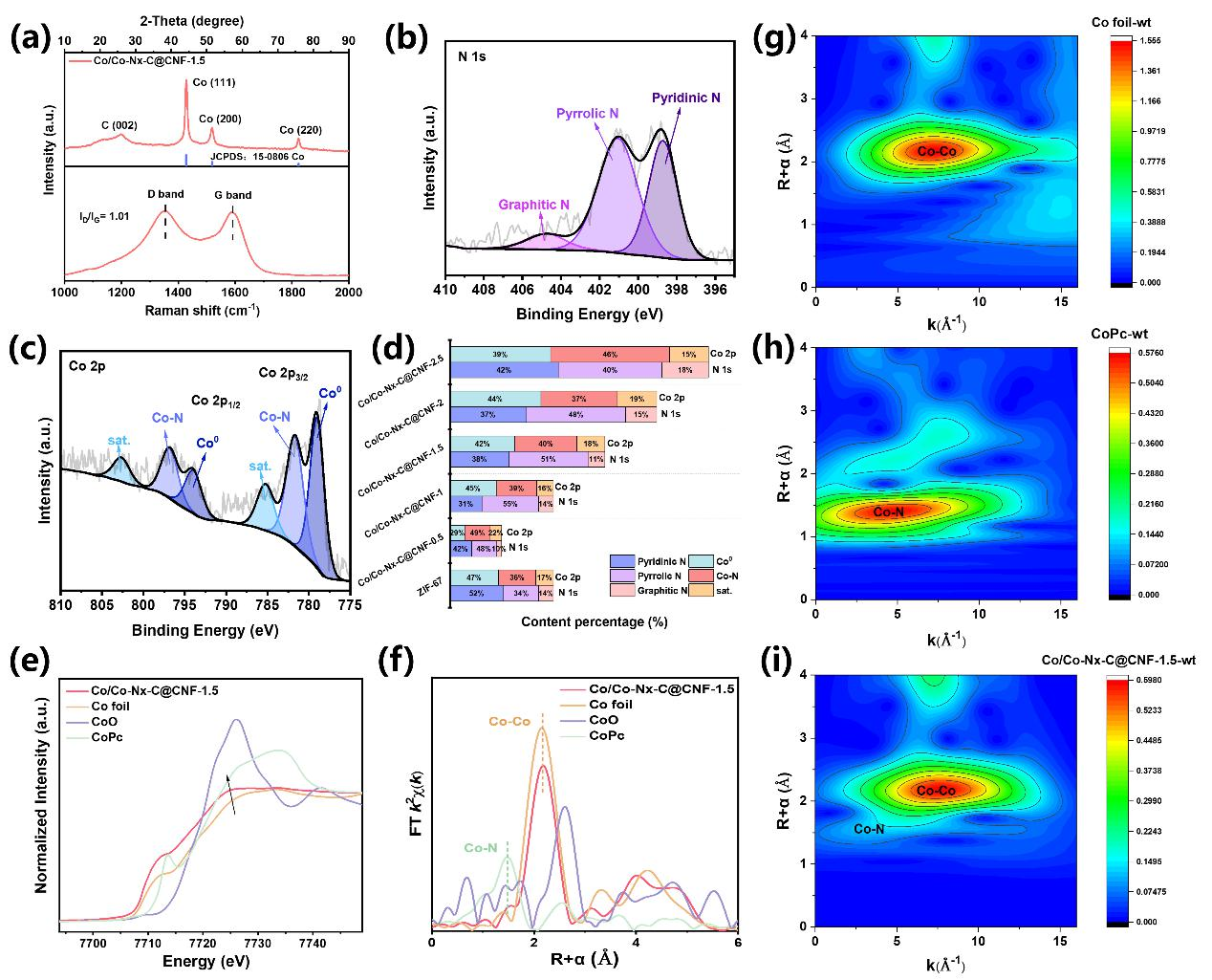
Figure 2. a) XRD patterns and Raman spectra, b) high-resolution N 1s XPS spectra of Co/Co-Nx-C@CNF-1.5, c) high-resolution Co 2p XPS spectra of Co/Co-Nx-C@CNF-1.5, d) total contents of pyridinic nitrogen, pyrrolic nitrogen, graphitic nitrogen, Co-N, and CoO in ZIF-67 and Co/Co-Nx-C@CNF-X (X = 0.5, 1, 1.5, 2, 2.5), e) normalized K-edge XANES spectra of Co/Co-Nx-C@CNF-1.5 and Co foil, CoO, and CoPc reference samples, f) FT-EXAFS spectra, g) WT contour plots of Co K-edge EXAFS of Co foil, h) CoPc, and i) Co/Co-Nx-C@CNF-1.5.
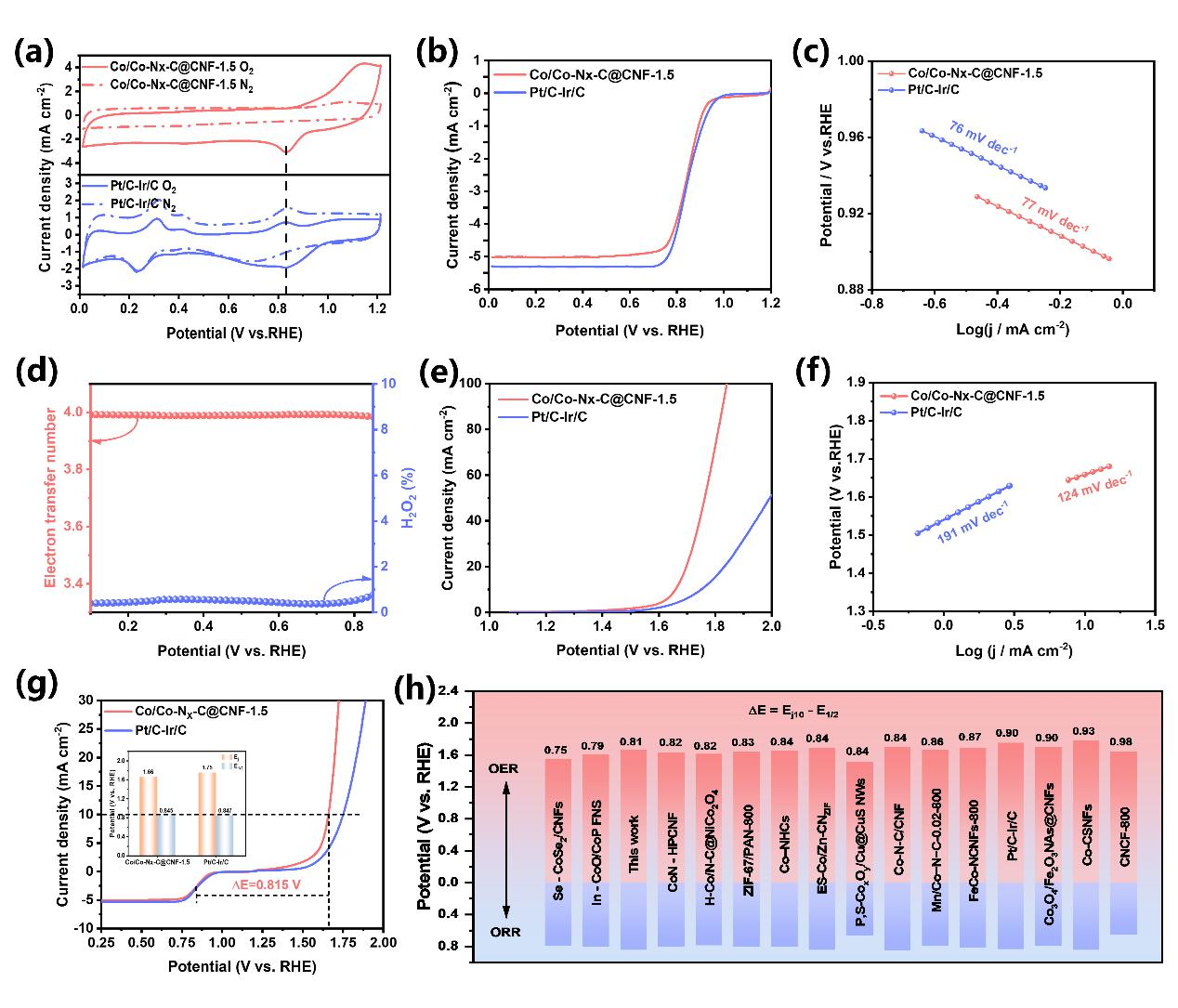
Figure 3. a) Cyclic voltammetry curves in N₂/O₂-saturated 0.1 M KOH, b) ORR linear sweep voltammetry (LSV) curves, c) Tafel plots of Co/Co-Nx-C@CNF-1.5 and Pt/C–Ir/C, d) ORR electron transfer number (n) and H₂O₂ yield determined by RRDE, e) OER LSV curves, f) Tafel plots of Co/Co-Nx-C@CNF-1.5 and Pt/C–Ir/C in N₂-saturated 1 M KOH, g) bifunctional ORR/OER LSV curves, h) comparison of ORR and OER performance of Co/Co-Nx-C@CNF-1.5 with other reported catalysts.
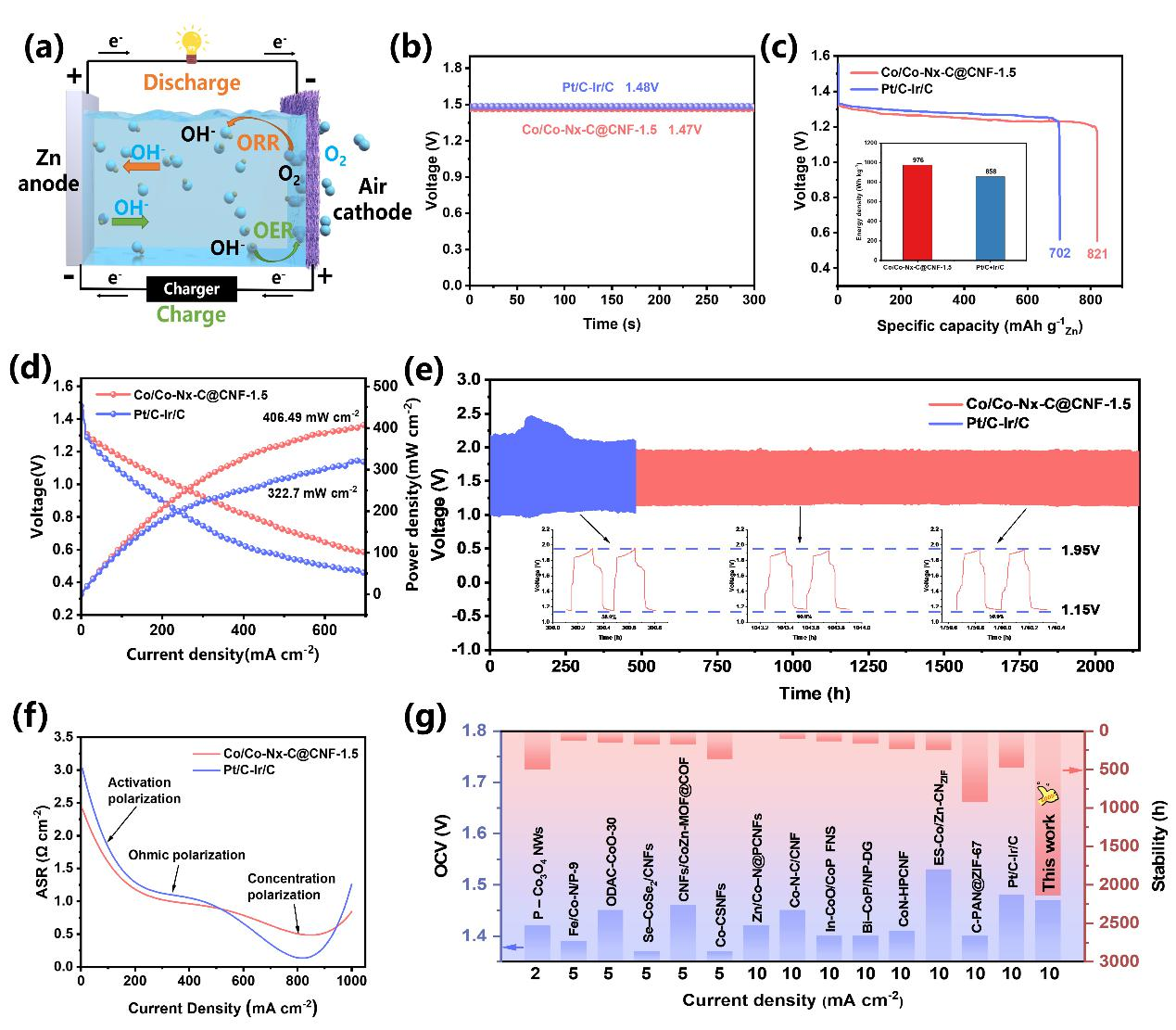
Figure 4. a) Schematic illustration of liquid ZABs, b) open-circuit voltage, c) specific capacity curves at 10 mA cm⁻² (inset shows the corresponding energy density curves), d) discharge polarization curves and the corresponding power density plots, e) charge–discharge voltage cycling curves at 10 mA cm⁻² (inset shows voltage efficiency), f) total ASR curves of ZABs using Co/Co-Nx-C@CNF-1.5 and Pt/C–Ir/C as cathode catalysts, g) comparison of the stability and open-circuit voltage (OCV) of Co/Co-Nx-C@CNF-1.5 with other reported catalysts.
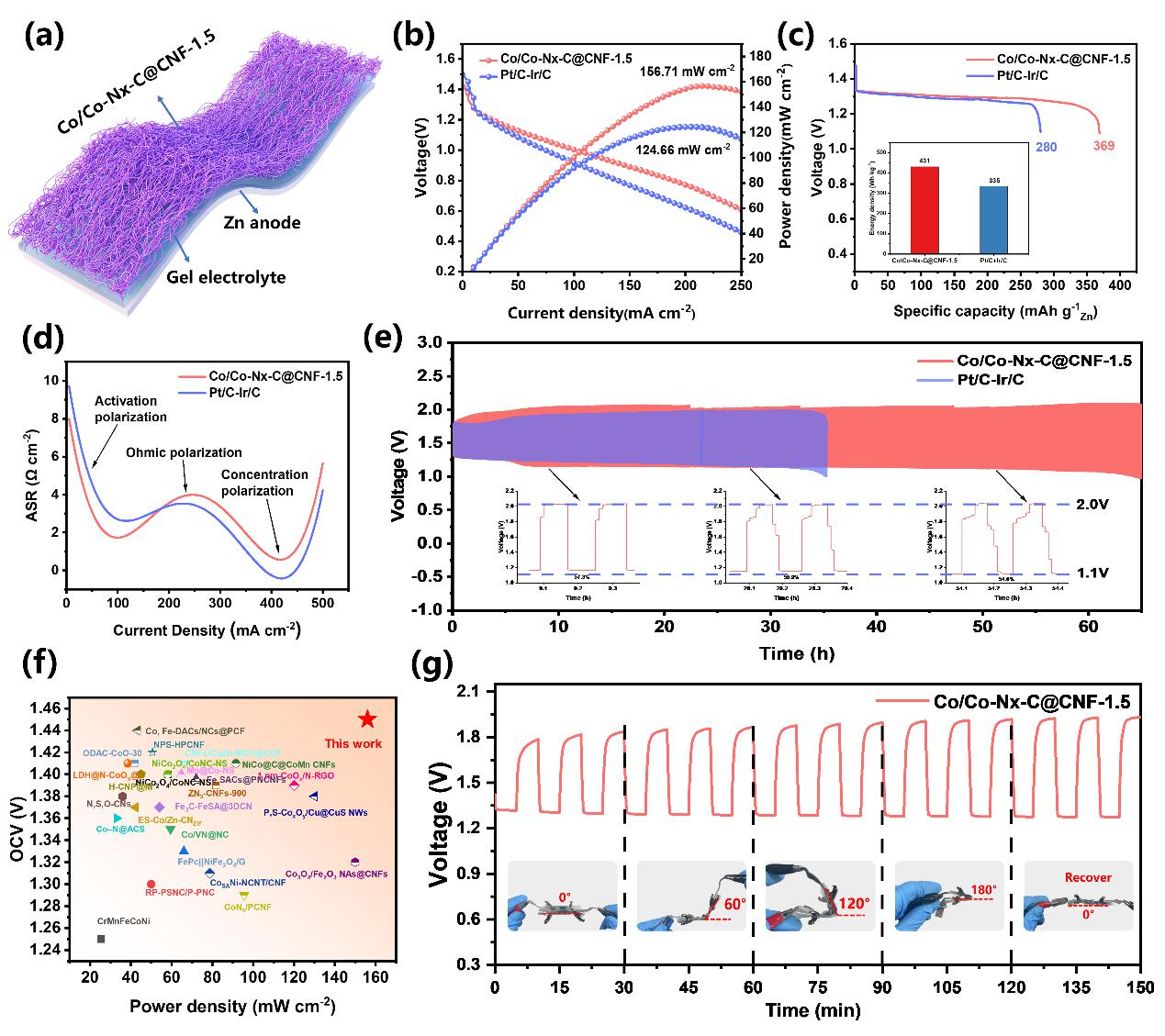
Figure 5. a) Schematic illustration of quasi-solid-state ZABs, b) discharge polarization curves and the corresponding power density plots, c) specific capacity curves at 2 mA cm⁻² (inset shows the corresponding energy density curves), d) total ASR curves, e) discharge and charge voltage cycling curves of ZABs based on Co/Co-Nx-C@CNF-1.5 and Pt/C–Ir/C at 2 mA cm⁻² (inset shows voltage efficiency), f) comparison of power density and open-circuit voltage (OCV) of Co/Co-Nx-C@CNF-1.5 with other reported catalysts, g) cycling stability curves at different bending angles at 2 mA cm⁻².
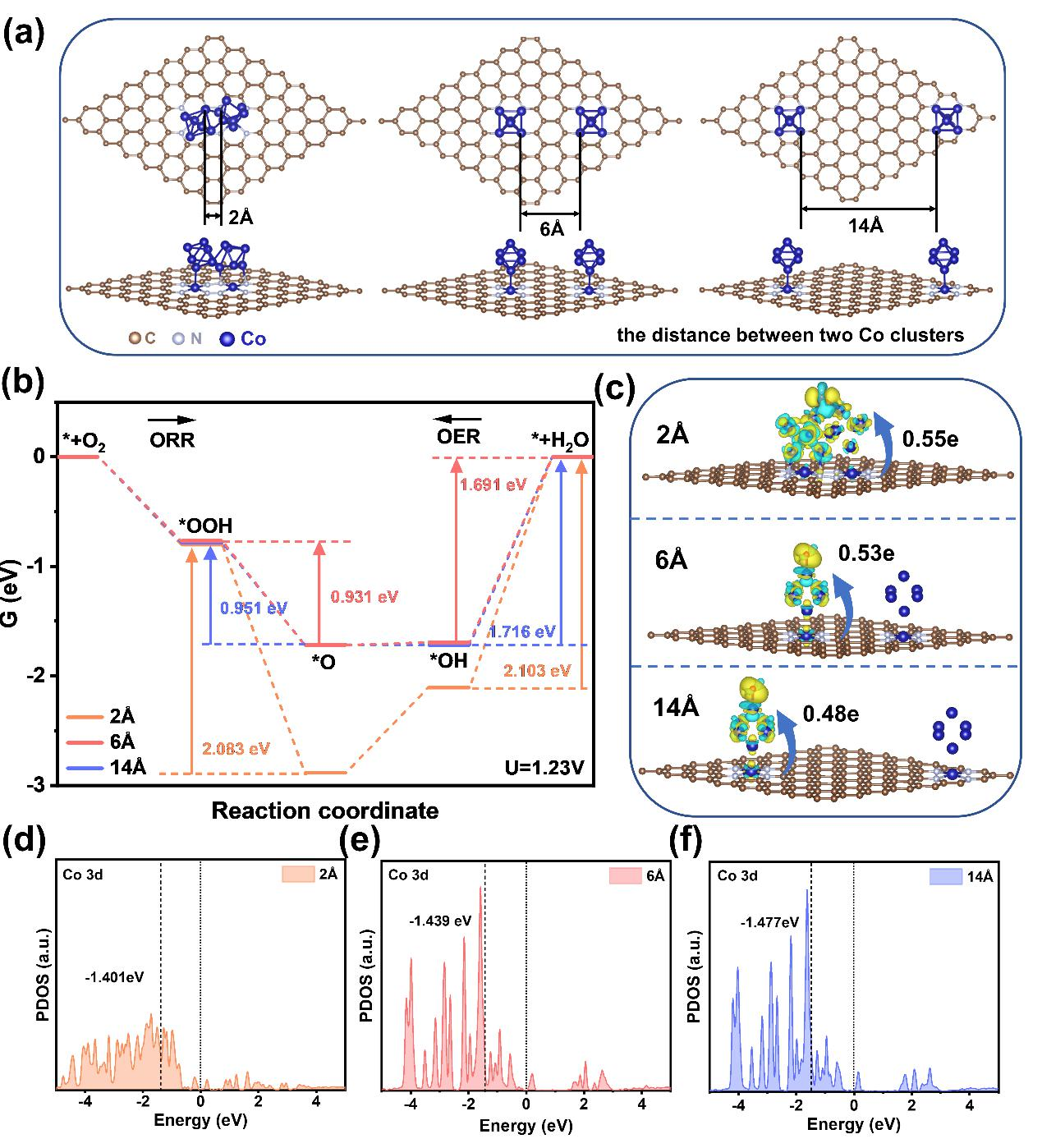
Figure 6. a) Co6@Co-N4 models with cluster spacings of 2, 6, and 14 Å, b) ORR/OER free energy diagrams, c) differential charge density and Bader charge transfer of *OH adsorption (blue: charge depletion; yellow: charge accumulation), d) PDOS of Co 3d at 2 Å, e) 6 Å, and f) 14 Å.
Paper link: https://doi.org/10.1002/adfm.202530298