

As early as the 18th century, Franklin discovered that a small spoonful of olive oil could spread rapidly over the surface of a pond, forming an oil film nearly a monolayer thick and calming the previously rippling water. Paradoxically, although lowering the interfacial tension should have made the water surface more deformable, the oil film instead caused the surface waves to decay rapidly. This indicates that isotropic interfacial tension alone is insufficient to describe the dynamic response of complex interfaces. When surfactant molecules, polymers, or particles are enriched at an interface, deformation induces changes in interfacial composition and microstructural rearrangement, generating additional stresses and viscous dissipation. The changes in interfacial concentration and tension caused by area variation manifest as Gibbs interfacial elasticity, while molecular exchange and microstructural relaxation give rise to time-evolving viscous dissipation. Boussinesq's early concept of surface viscosity, and the later Boussinesq–Scriven model, incorporated interfacial viscosity into the hydrodynamic description. This dynamic mechanical response of interfaces is not only relevant to the stability of foams and emulsions, but also modifies interfacial mass transfer and the motion of biological fluid interfaces such as alveoli. In recent years, interfacial viscoelasticity has been used to understand various fluid instability processes, including the breakup of viscous liquid jets, droplet pinch-off, and tip splitting in viscous fingering, demonstrating that the recovery and dissipation of the interface itself can alter the growth and length-scale selection of instabilities.
Thin-film composite polyamide (PA) membranes fabricated via water–oil interfacial polymerization (IP) are core materials in modern reverse osmosis and nanofiltration processes. However, their development has long been constrained by the permeability–selectivity trade-off, a bottleneck closely related to the complex and difficult-to-control formation process of the PA selective layer. During IP, amine monomers in the aqueous phase cross the interface into the organic phase and react with acyl chloride monomers to form a thin PA layer. Monomer mass transfer, chemical reactions, and interfacial flow are highly coupled, further shaping the wrinkles, ridges, and hollow structures on the membrane surface, and ultimately affecting the effective mass-transfer area, selective-layer structure, and separation performance. This indicates that the water–oil interface during IP is not a fixed, smooth plane, but rather undergoes dynamic expansion and undulation during the process (Fig. 1a). For such a dynamic interface, the recovery and dissipation generated upon deformation (e.g., area expansion) are intrinsic mechanical properties, and interfacial viscoelasticity is therefore non-negligible (Fig. 1b).
To clarify the mechanism by which interfacial rheology governs PA membrane structure formation, the key is to establish a platform that can continuously tune interfacial viscoelasticity while keeping the static interfacial tension and the basic chemical properties of the interface unchanged. Although interfacial modifiers such as surfactant molecules, polymers, or particles have been widely used to regulate membrane structure and improve separation performance, existing studies mainly focus on equilibrium or averaged physical quantities such as interfacial tension and monomer partitioning, while the dynamic stress response of the interface under deformation has long been overlooked.
Based on this understanding, the research group led by Xunda Feng at the State Key Laboratory for Modification of Chemical Fibers and Polymer Materials and the Center for Advanced Low-Dimensional Materials of Donghua University revealed the core mechanism by which interfacial viscoelasticity controls fluid instability during interfacial polymerization and the structural evolution of membranes. The research team formed a monolayer at the water–oil interface using photoreactive amphiphilic molecules and tuned their interfacial packing state and interfacial rheological response through precisely controlled UV irradiation (Fig. 1c). While keeping static interfacial tension and other physical quantities unchanged, they established a research platform that enables continuous tuning of the interfacial rheological state. The study shows that interfacial viscosity can significantly affect the damping of interfacial instabilities and determine the characteristic length scale of the hollow-ridged structures on the membrane surface (Fig. 1d). The resulting polyamide membranes exhibit macroscopically uniform hollow-ridged morphologies with well-defined, quantifiable characteristic length scales (Fig. 1e). The polyamide nanofiltration membranes fabricated based on this mechanism feature macroscopically uniform hollow-ridged structures, achieving a high water permeance of 44.15 LMH/bar and a Na2SO4 rejection of 99.82%, and the scalability of this strategy was further validated at the membrane-module scale.
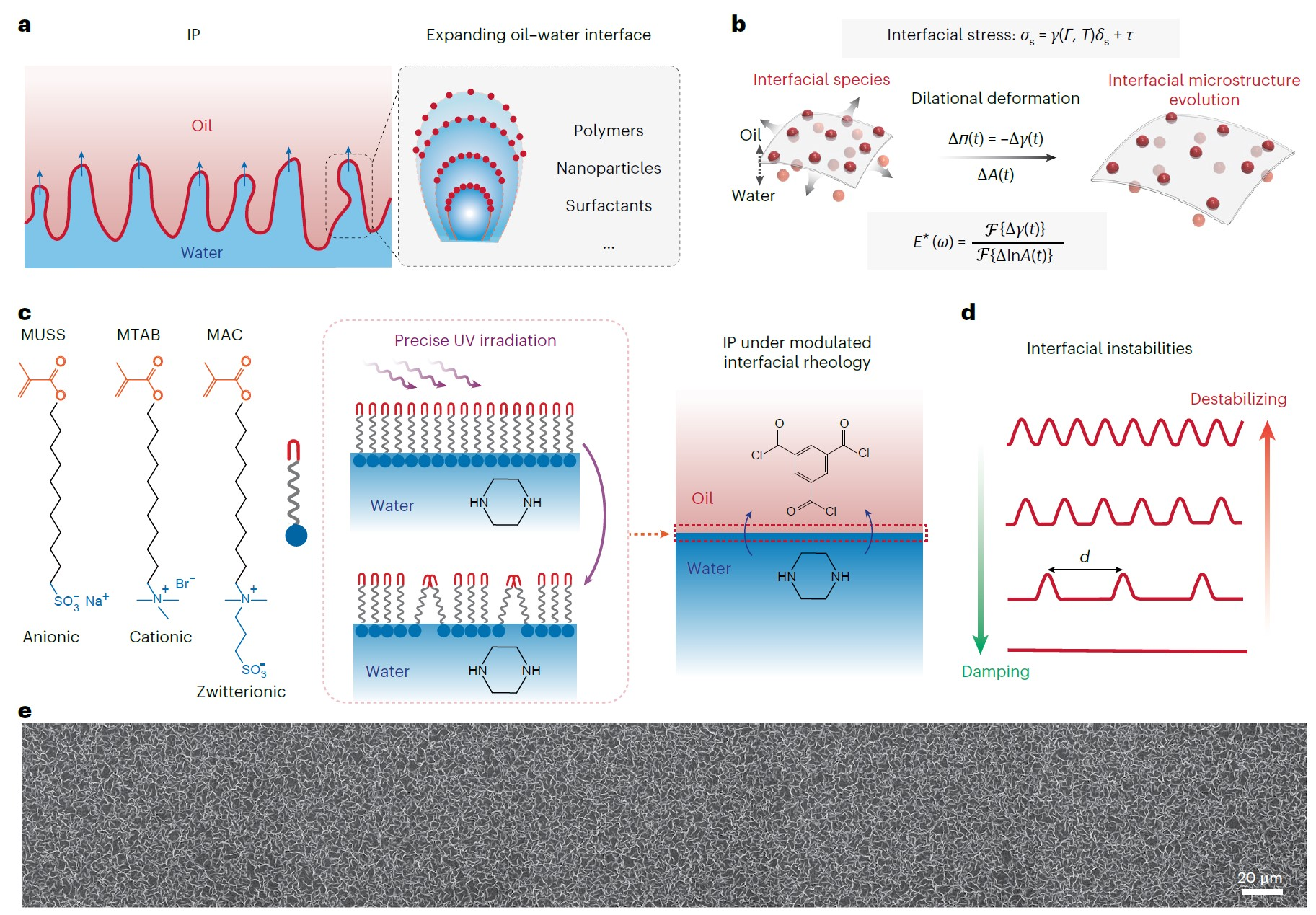
Figure 1. Regulation of fluid instabilities during interfacial polymerization and the formation of large-area regular PA membrane morphologies by interfacial rheology.
Figure 2 systematically demonstrates that the PA membrane morphologies regulated by interfacial rheology exhibit tunable and quantifiable characteristic dimensions. Taking the zwitterionic MAC system as an example, after pretreatment with different UV intensities, the IP-MACi membranes all form uniform surface textures composed of basin regions and striped ridge structures. As the UV intensity increases, the spacing between ridge structures gradually decreases and their density increases, while the overall regularity of the morphology is maintained (Fig. 2a). Neither conventional IP membranes nor UV-treated membranes without the amphiphilic monolayer form similar regular structures, indicating that this morphology does not arise from UV irradiation. Cross-sectional TEM and back-side SEM further prove that these ridge structures have hollow interiors, while the selective-layer thickness remains essentially constant at ~30 nm (Fig. 2b–d). AFM further reveals that these surface patterns exhibit a pronounced ridge height of ~400 nm, and the surface area expansion ratio φ increases continuously with UV intensity, indicating that morphology regulation simultaneously enhances the effective mass-transfer area (Fig. 2e, f). Two-dimensional FFT analysis further converts this surface morphology into quantitatively comparable structural parameters. Although the ridge structures are not strictly periodic, clear characteristic peaks appear in reciprocal space, indicating a well-defined preferred spacing (Fig. 2g). Therefore, the characteristic length scale d can be used to describe the length scale of the membrane surface structures formed after the interfacial instability is frozen. As the UV intensity increases, d decreases monotonically, while the ridge density characterized by 1/d² increases correspondingly; this trend is observed in all three amphiphile systems with different head-group chemistries—MAC, MTAB, and MUSS—demonstrating the cross-system consistency of this regulation rule (Fig. 2h–k).
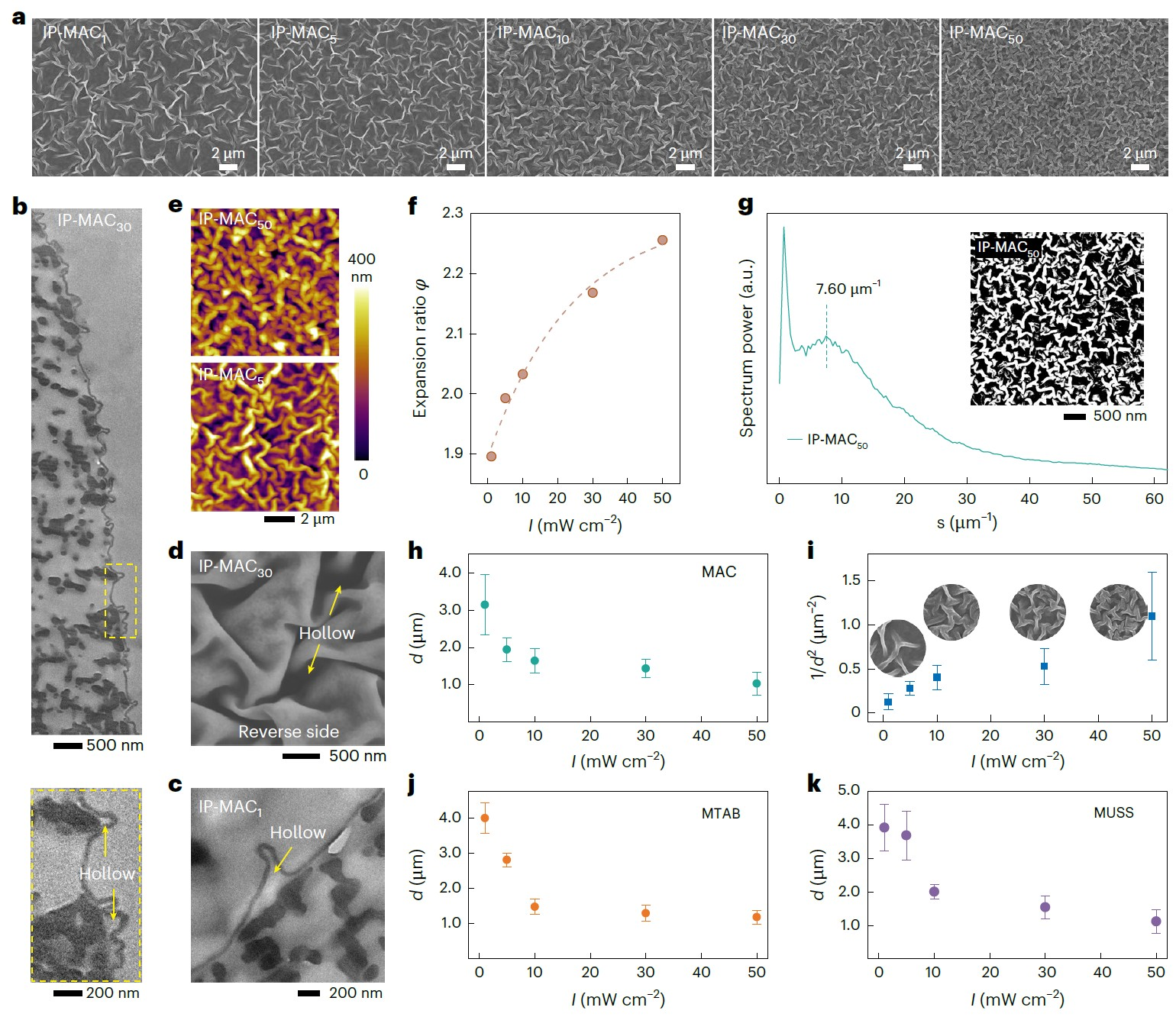
Figure 2. Precise tuning of interfacial rheology enables continuous evolution of hollow-ridged structures of PA membranes.
Synchrotron X-ray reflectivity was employed to characterize the structural changes of the MAC interfacial layer after UV irradiation (Fig. 3a). As the intensity increases, the Kiessig fringe spacing increases and the amplitude weakens, indicating that the interfacial layer becomes slightly thinner while its structural uniformity and coherence decrease. Combined with NMR and GPC results, UV irradiation only induces slight oligomerization of a small number of molecules, causing monomers and oligomers to coexist at the interface and disrupting the original two-dimensional molecular packing. Notably, this structural evolution does not significantly change the static interfacial tension, which remains at approximately 6 mN m⁻¹ for the n-hexane/water interface under different irradiation conditions (Fig. 3b). The research team further characterized the interfacial rheological properties of the interfacial layer using the oscillating barrier method (Fig. 3c). Under small-amplitude harmonic area oscillations, the tension response exhibits different amplitudes and phase lags, reflecting the ability of the interface to store and dissipate deformation energy, from which the apparent complex modulus and interfacial viscosity are obtained (Fig. 3d). The experimental results show that the complex interfacial moduli and interfacial viscosities of the MAC, MUSS, and MTAB systems all decrease significantly with increasing UV intensity, gradually approaching a plateau at high intensities (Fig. 3e). More importantly, the apparent interfacial viscosities of the three systems all follow a scaling relation determined jointly by two-dimensional photopolymerization kinetics and interfacial structural coherence, unifying the rapid decrease at low intensities and the plateauing trend at high intensities. Molecular dynamics simulations further explain the molecular mechanism underlying the tunable interfacial rheology: a small number of oligomers disrupt the originally cooperative packing and enhance the lateral mobility of interfacial molecules (Fig. 3f–h). The resulting defect-like heterogeneous structures reduce the structural coherence of the interfacial layer and increase the free space available for molecular rearrangement (Fig. 3i).
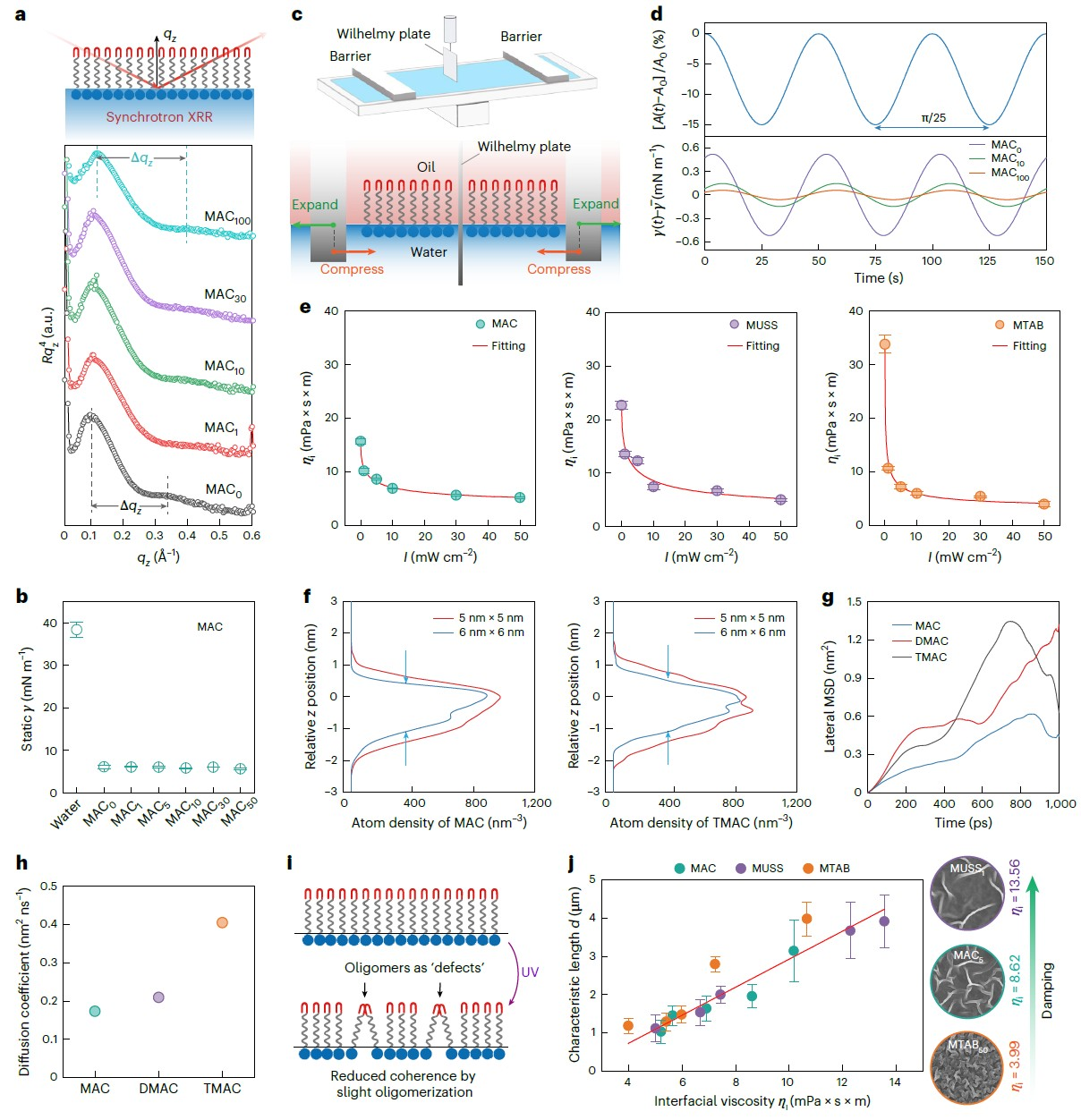
Figure 3. Evolution of interfacial microstructure tunes water–oil interfacial rheology and controls the characteristic length scales of PA membrane morphologies.
To clarify the formation mechanism of the ridge structures, the research team first ruled out several possible sources of instability. Cross-sectional TEM and back-side SEM show that the ridge structures have clearly hollow interiors, while the PA selective-layer thickness remains at approximately 30 nm. This morphology is more consistent with a process in which a polyamide layer of relatively uniform thickness follows the interfacial undulations and subsequently solidifies, rather than supporting a Turing-type reaction–diffusion mechanism. If spinodal phase separation were dominant, polymer density differentiation should appear within the selective layer, with characteristic length scales governed by the thermodynamics and kinetics of phase separation—this is inconsistent with the thickness-uniform, hollow-interior ridge structures observed here. Meanwhile, the Rayleigh number is far less than 1, indicating that Rayleigh–Taylor instability and double-diffusive convection are also unlikely to dominate under the present conditions. On this basis, the research team attributed the morphology formation to mass-transfer-induced Marangoni instability. In situ measurements of dynamic interfacial tension show that as PIP crosses the water–oil interface into the n-hexane phase, the interfacial tension continuously decreases, indicating that the interfacial tension is highly sensitive to the interfacial PIP concentration and satisfies ∂γ/∂c < 0. Therefore, even tiny concentration fluctuations are converted into tension gradients along the interface, generating Marangoni stresses. According to the classical analysis of mass-transfer-induced interfacial turbulence by Sternling and Scriven and others, such tension gradients can amplify pre-existing perturbations and drive the water–oil interface into a state of fluid instability.
Notably, UV irradiation leaves the PIP partitioning and static interfacial tension essentially unchanged with increasing UV intensity, indicating that the driving force for instability is not significantly altered. The systematic changes in membrane morphology length scales are more likely to arise from the regulation of interfacial rheological damping. For water–oil interfaces enriched with MAC, MTAB, or MUSS, the measured apparent interfacial viscosities fall within the range of 1–40 mPa·s·m and can be precisely controlled by UV irradiation. In comparison, the bulk viscosities of the aqueous phase and n-hexane are approximately 1 and 0.3 mPa·s, respectively. Considering the interfacial viscosity, bulk viscosity, and micrometer-scale dimensions of the present system, the resulting Boussinesq number is far greater than 1, indicating that interfacial viscous dissipation dominates. Figure 3j further establishes a direct correlation between the interfacial rheological state and the structural length scale of the PA membrane surface. When the structural characteristic length d is re-analyzed against the interfacial viscosity, the data for the three systems converge onto a single monotonic trend. This result demonstrates that the characteristic length scale of the interfacial instability structures is determined primarily by the interfacial rheological state rather than by the chemical nature of the specific amphiphile.
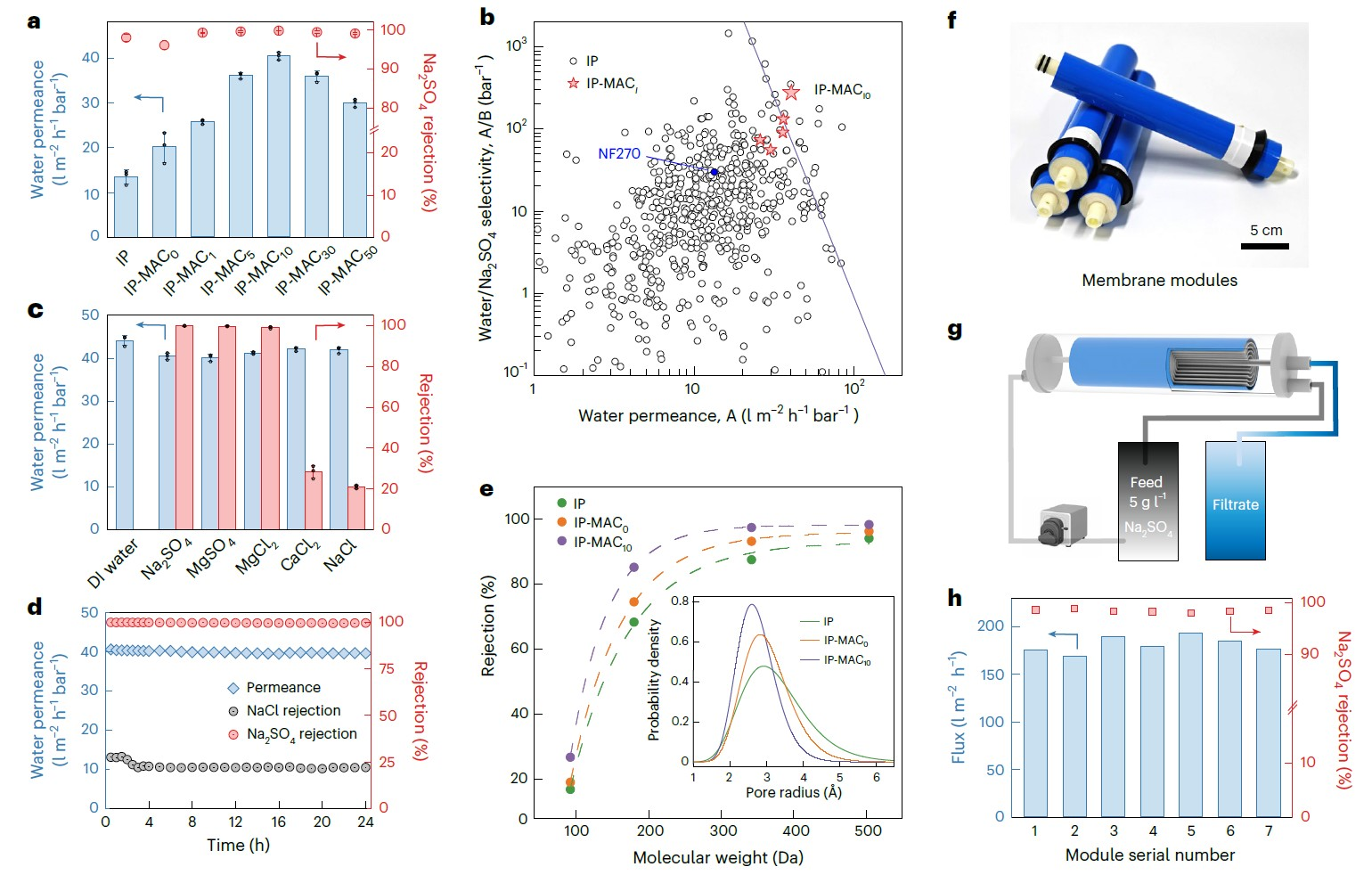
Figure 4. Nanofiltration performance and modular application of PA membranes.
After clarifying the regulatory role of interfacial rheology in membrane morphology, the research team further evaluated the nanofiltration performance of the PA membranes. The regular hollow-ridged structures significantly enhance the effective mass-transfer area of the membrane while maintaining a relatively thin selective layer. The representative IP-MAC10 membrane achieves a water permeance of 44.15 ± 1.21 L m⁻² h⁻¹ bar⁻¹ while retaining a Na2SO4 rejection of 99.82 ± 0.08%, exhibiting a competitive balance between water permeance and selectivity. Denser ridge structures are not necessarily better, as overcrowding causes local contact and loss of effective area. The high selectivity originates from the combined effect of membrane structure and interfacial chemistry: the controlled instability forms a denser PA network with fewer defects, and the average effective pore radius of the IP-MAC10 membrane decreases from approximately 0.29 nm for conventional membranes to 0.26 nm, while the ridge structures increase the exposed area of carboxylic acid groups on the membrane surface, strengthening Donnan exclusion against divalent anions. In mixed-salt systems, the membrane retains a Na2SO4 rejection exceeding 99.5% while allowing nearly 80% of NaCl to pass through, achieving a maximum NaCl/Na2SO4 selectivity factor of 439. This strategy also demonstrates good scalability: the team successfully fabricated a large-area membrane sheet of 0.64 m × 0.32 m and assembled it into a spiral-wound module with an effective membrane area of 0.54 m². All seven membrane modules exhibited stable and reproducible water flux and Na2SO4 rejection performance, indicating that UV-tuned interfacial rheology can be integrated with existing roll-to-roll membrane manufacturing processes, providing a viable pathway for modular applications.
The related research was published in Nature Chemical Engineering (2026, DOI: 10.1038/s44286-026-00419-7) under the title “Interfacial rheology for physics-based structuring of polyamide desalination membranes”. The State Key Laboratory for Modification of Chemical Fibers and Polymer Materials and the Center for Advanced Low-Dimensional Materials of Donghua University are the first affiliations. Researcher Xunda Feng is the corresponding author, with Professor Xinglin Lu from the University of Science and Technology of China and Professor M. Elimelech from Rice University serving as co-corresponding authors. Qingchen Tang, a PhD student at Donghua University, is the first author of the paper. Professor Shan Chang from the College of Information Science and Technology of Donghua University, Associate Professor Song-Chuan Zhao from Kyushu University, and Associate Professor Yizhou Zhang from Tohoku University also made important contributions.
Paper link: https://doi.org/10.1038/s44286-026-00419-7