

The research team led by Professor WANG Gang from the State Key Laboratory for Advanced Fiber Materials and the College of Materials Science and Engineering at Donghua University has long been dedicated to the field of semiconducting fibers + flexible intelligent systems. Addressing national strategic needs such as embodied intelligence, precision medicine, and immersive virtual reality (VR), the team has overcome a series of key challenges, ranging from the precision fabrication of semiconducting fibers to the integration of flexible systems. Recently, they published four consecutive research articles in journals including the National Science Review and Advanced Materials, establishing a cohesive technological framework encompassing perception, computation, and interaction, thereby providing new solutions for next-generation embodied intelligent fiber systems.
In fabrication strategy and brain-inspired computing, the team addressed the challenges of gradient non-differentiability and high power consumption in neuromorphic hardware training. They proposed a solvent interdiffusion solidification spinning (SISS) strategy. By precisely controlling solvent diffusion kinetics to overcome Plateau–Rayleigh instabilities, they fabricated coaxial trilayer fibers with well-defined heterojunction interfaces. The resulting tunable textile-based vertical organic electrochemical transistor (TT-vOECT) exhibits nonlinear transfer characteristics that closely approximate the Sigmoid derivative, enabling device-level realization of surrogate gradients for gradient-based learning. Furthermore, the team proposed a conditionally activated backpropagation (CAB) mechanism, implemented using reconfigurable logic arrays based on dual TT-vOECTs, which enables sparse, event-driven weight updates. This framework achieved classification accuracy comparable to software baselines in EEG-based disease diagnosis while reducing computational redundancy by approximately 20%, laying a foundation for flexible neuromorphic hardware platforms. (Advanced Materials, 2025: e14904)

(Figure 1 Semiconducting fiber transistors as a hardware surrogate gradient for backpropagation in spiking neural networks.)
In architecture optimization and high-fidelity perception, the team focused on the need for wearable health monitoring to capture high-frequency weak electrophysiological signals. They proposed a conformal nanofibrous vertical OECT (NF-vOECT) platform based on a fully electrospun strategy. This device innovatively integrates ion-permeable nanofiber electrodes with a semiconducting fiber array, breaking the ion transport limitations of conventional dense metal electrodes and enabling highly efficient vertical ion injection. Consequently, the NF-vOECT achieves a high transconductance of 57.5 mS and a fast response time of 11.7 ms, significantly outperforming conventional planar fiber devices in gain-speed performance. Leveraging its inherent amplification and frequency-selective response, this system improved the signal-to-noise ratio (SNR) of electrocardiogram (ECG) signals by approximately 40% and, when integrated with a convolutional neural network, achieved approximately 89% accuracy in heartbeat classification, offering a new solution for high-fidelity, breathable skin electronics. (Advanced Materials, 2026: e11945)
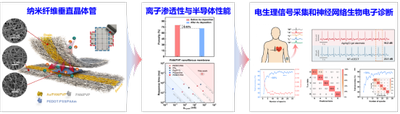
(Figure 2 Conformal vertical organic electrochemical transistors with ion-permeable electrodes for electrophysiological monitoring.)
In interface matching and long-term implantable diagnosis and therapy, the team tackled signal attenuation caused by the modulus mismatch between conventional electronic devices and biological tissues. They developed a novel n-type depletion-mode semiconducting hydrogel using an ionic liquid (IL)-mediated phase separation strategy. This material creates an interconnected conductive network of poly(benzodifluoradione) (PBFDO) within a soft polyacrylamide (PAAm) matrix, achieving tissue-like softness and efficient coupled ionic-electronic transport. The resulting all-hydrogel organic electrochemical transistor (OECT) exhibits a high transconductance of 43 mS, excellent biocompatibility, and can conform to the skin for real-time ECG/EOG monitoring. Furthermore, it maintained stable operation for one week in subcutaneous implantation in rats, capturing acute nociceptive stimuli and electrocardiogram changes, thereby providing material support for implantable bioelectronics and precision pain assessment. (Advanced Science, 2025: e17375)
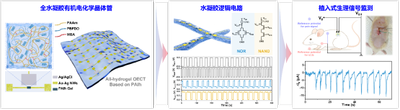
(Figure 3 All-hydrogel-based organic electrochemical transistors for implantable physiological signal monitoring.)
In topological design and immersive interactive systems, with an interdisciplinary collaboration with the team led by Professor ZHANG Guanglin from the College of Information Sciences and Technology, the team overcame the limitations of the rigid one-to-one correspondence between physical props and virtual assets in traditional human-computer interaction. They proposed a fabric topological haptic proxy (FTHP) architecture. Inspired by origami, they embedded heterogeneous rigid segments within a flexible fabric and integrated S/Z-twist triboelectric sensing fibers, encoding complex physical interactions into classifiable electrical signatures. This topological constraint allows a single fabric surface to be dynamically reconfigured into various interactive terminals, such as a flat touchpad or 3D geometric controllers, with high signal robustness. Combined with a lightweight convolutional neural network (CNN), the system achieved a 92.4% recognition accuracy across 14 distinct actions, successfully demonstrating multimodal command control in simulated space exploration tasks, highlighting the immense potential of fiber systems in metaverse interaction. (National Science Review, 2026: nwag041)
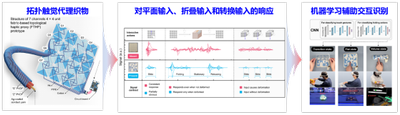
(Figure 4 Fabric topological haptic proxy for interactive virtual reality.)
These four achievements follow the team's previous research on spinnable, patternable, and integrable semiconducting fibers, while advancing the evolution from functional fibers to intelligent systems incorporating perception, computation, and interaction. In terms of materials and manufacturing, on holding strategies like liquid crystal shearing (Nat. Sci. Rev., 2025, 12: nwaf331) and hybrid reinforcement (Adv. Funct. Mater., 2025: e15197), the team developed three-layer coaxial heterojunctions via SISS (Adv. Mater., 2025: e14904) and semiconducting hydrogels via IL-mediated phase separation (Adv. Sci., 2025: e17375), achieving a significant expansion in material dimensionality and bio-adaptability. At the device level, from photolithographic integration (Adv. Mater., 2025, 37: 2417452) to all-electrospun vertical architectures (Adv. Mater., 2026: e11945) and topological logic encoding (Natl. Sci. Rev., 2026: nwag041), the team has maintained high resolution while significantly enhancing ion-electron coupling efficiency and signal recognition robustness. Finally, for the system integration, the team not only accomplished logic discrimination for sweat and glucose but also achieved a breakthrough in brain-inspired neuromorphic computing and immersive topological haptic interaction. This provides a technological pathway from high-performance perception to edge computing and further to human-machine mutual feedback. These advances mark a transition for fiber-based electronic devices from fundamental functional unit research to end-to-end, energy-efficient, and standardized wearable embodied intelligent systems.
The research was led by Donghua University in collaboration with the China Institute of Sport Science, Shanghai Ninth People's Hospital affiliated with School of Medicine, Shanghai Jiao Tong University, Tongji University, City University of Hong Kong, the University of California, Los Angeles, and Yuyue Home Textile Co., Ltd., among others. The team aims to deepen the heterogeneous integration of multifunctional fibers, advance end-to-end scalable manufacturing, and strive for breakthroughs in the industrialization of fiber-based intelligent systems.
Paper Information:
[1] Fiber Transistors as a Hardware Surrogate Gradient for Backpropagation in Spiking Neural Networks[J]. Advanced Materials, 2025: e14904.
[2] Conformal Vertical Organic Electrochemical Transistors with Ion‐Permeable Electrodes for Electrophysiological Monitoring[J]. Advanced Materials, 2026: e11945.
[3] All‐Hydrogel‐Based Organic Electrochemical Transistors for Implantable Physiological Signal Monitoring[J]. Advanced Science, 2025: e17375.
[4] Fabric topological haptic proxy for interactive virtual reality[J]. National Science Review, 2026: nwag041.