

Recently, a new progress in the field of flexoelectric catalysis is made by a research team led by Researcher Guojun Zhang(an academician of the World Academy of Ceramics) from the State Key Laboratory of Advanced Fiber Materials and the Institute of Functional Materials, in collaboration with a team led by Researcher Wenzhong Wang from the Shanghai Institute of Ceramics. This achievement was published online in the international journal Advanced Functional Materials under the title “Enhancing Flexoelectric Catalytic Performance by Modulating the Intrinsic Magnetism of LaCrO3”.
Flexoelectric catalysis is an emerging catalytic strategy that enhances catalytic performance through the flexoelectric polarization effect generated by materials subjected to non-uniform strain. This study proposes, for the first time, a strategy to enhance the efficiency of flexoelectric catalysis and improve the selectivity of products by modulating the intrinsic magnetism of the catalyst. The transition from the paramagnetic (PM) to the antiferromagnetic (AFM) state in LaCrO3 significantly enhances the flexoelectric polarization effect and boosts hydrogen peroxide production rate by 90%. Importantly, the AFM state of the LaCrO3 catalyst exhibits weaker oxygen adsorption and more restricted electron transfer compared to the PM state, inhibiting complete oxygen dissociation and the formation of highly reactive intermediates (hydroxyl and superoxide radicals), while improving the selectivity for the two-electron oxygen reduction reaction pathway. This study underscores the significance of regulating the intrinsic magnetism of catalysts in flexoelectric catalysis and offers a novel idea for designing efficient and controllable flexoelectric catalysts.
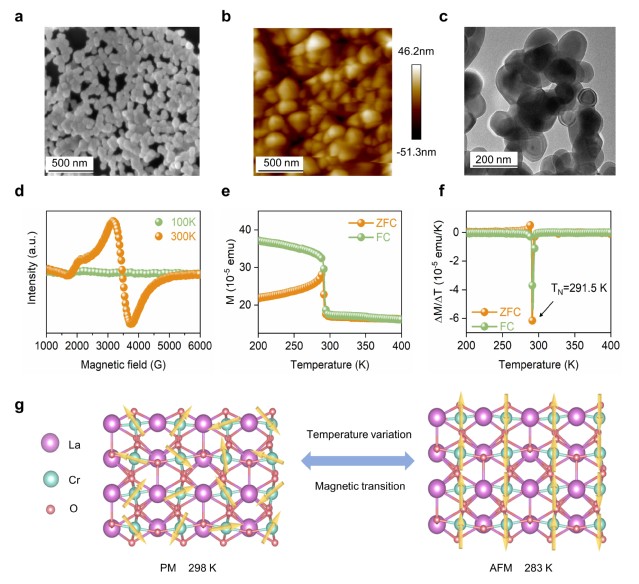
Figure 1 The characterization of LaCrO3 nanoparticles.
Figure 1 shows the characterization of LaCrO3 nanoparticles. By identifying the point of sudden change in magnetization under both cooling conditions, we determined that the TN of the synthesized LaCrO3 nanoparticles is 291.5 K (Figure 1f). Therefore, the intrinsic magnetism of LaCrO3, transitioning from PM to AFM state, can be modified by adjusting the reaction temperature during the flexoelectric catalytic process.
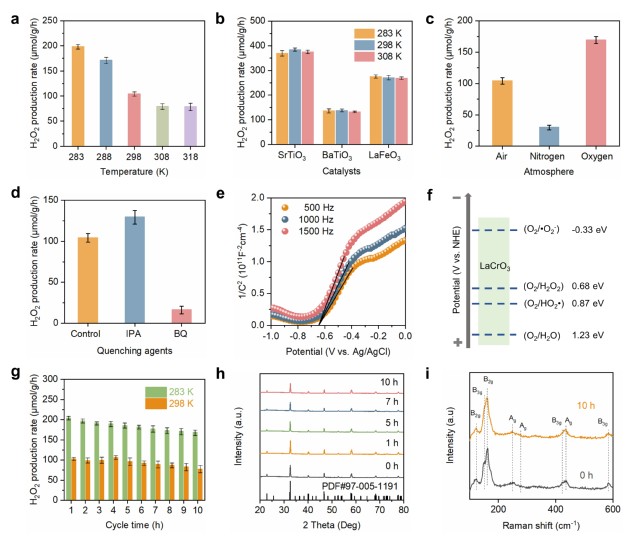
Figure 2 Flexoelectric catalytic performance of LaCrO3.
The researchers compare the flexoelectric catalytic performance of LaCrO₃ nanoparticles under different magnetic states. The results reveal that antiferromagnetic ordering plays a significant role in enhancing the H₂O₂ yield. The system primarily produces H₂O₂ through the oxygen reduction reaction (ORR) pathway, and the catalyst exhibits excellent structural and cycling stability (Figure 2).
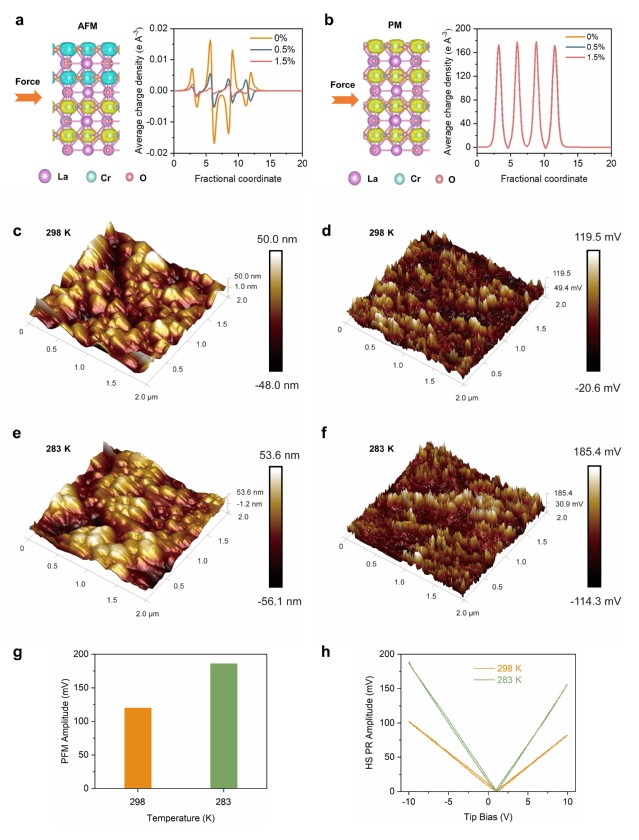
Figure 3 Effect of intrinsic magnetic regulation on the flexoelectric effect
The researchers combine theoretical charge density calculations with piezoresponse force microscopy (PFM) characterization, revealing that LaCrO₃ nanoparticles in the antiferromagnetic (AFM) state exhibit a significantly stronger flexoelectric effect than those in the paramagnetic (PM) state (Figure 3).
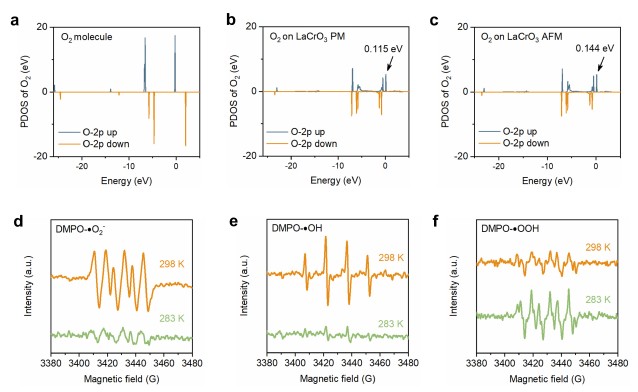
Figure 4. Influence of Different Magnetic Surfaces on Oxygen Adsorption and Intermediate Radical Formation
The researchers calculated the adsorption energy on different magnetic surfaces through theoretical methods. Combined with the electron paramagnetic resonance (EPR) results, it is revealed that the antiferromagnetic (AFM) spin ordering weakens oxygen adsorption on the catalyst surface, thereby suppressing the formation of excessively reactive intermediates (Figure 4).
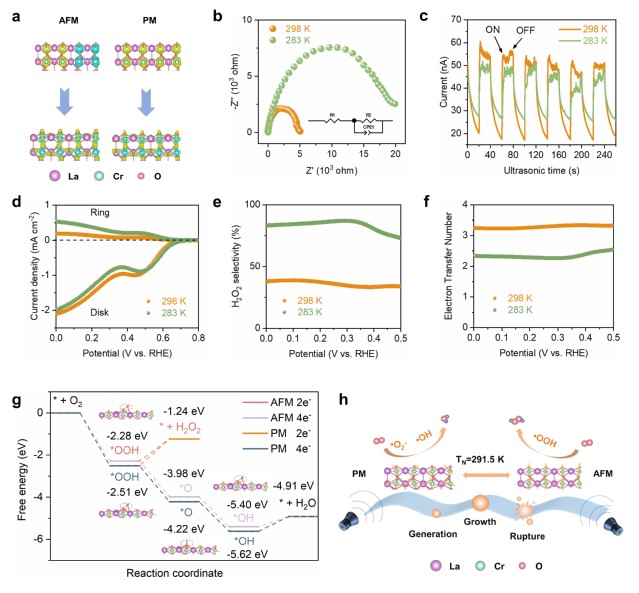
Figure 5. Exploration of the Flexoelectric Catalytic Oxygen Reduction Pathway on Different Magnetic Surfaces
The researchers integrate density functional theory (DFT) calculations with electrochemical measurements, demonstrating that the AFM spin ordering restricts electron transfer during the reaction process, making the reaction pathway more inclined toward the two-electron oxygen reduction reaction (2e⁻-ORR) (Figure 5).
The study firstly proposes a strategy to enhance the efficiency and product selectivity of flexoelectric catalysis by modulating the intrinsic magnetism of the catalyst. It highlights the crucial role of intrinsic magnetic regulation in flexoelectric catalysis and provides a novel approach for designing efficient and controllable flexoelectric catalysts.
Paper link:https://advanced.onlinelibrary.wiley.com/doi/10.1002/adfm.202512272