

Recently, the team led by Wang Hongzhi and Hou Chengyi from the State Key Laboratory of Advanced Fiber Materials and the College of Materials Science and Engineering, DHU, has developed an efficient device for generation of solid-liquid power and energy (H2O2 & energy generator, HEG), conducting an in-depth research on the mechanisms of chemical reactions and energy transfer occurring at the solid-liquid interface. The related findings have been published in Nature Communications titled Solid-liquid interface charge transfer for generation of H2O2 and energy. DHU is the first affiliation. The corresponding authors are Professor Wang Hongzhi and Researcher Hou Chengyi, and the first author is PhD student Hu Yunhao.
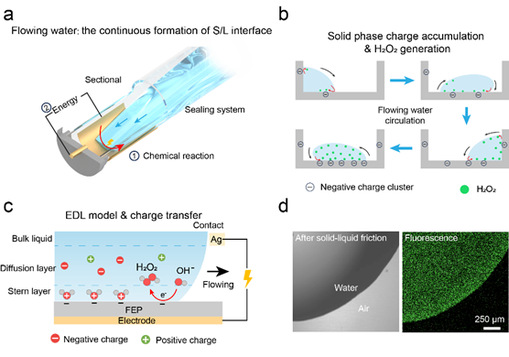
Fig. 1 Electron transfer mechanism at the solid-liquid interface and H2O2 generation.
In this research, it is demonstrated with Kelvin probe force microscopy (KPFM) that electron transfer is dominant in the charge transfer process between fluorinated ethylene propylene (FEP) and water. Specifically, some OH- at the liquid phase lose electrons, converting into OH, and then combine with each other to form H2O2. This indicates that electron transfer at the interface between FEP and water simultaneously drives both energy collection by the generator and the generation of H2O2. Through transistor-like structural design, construction of a charge isolation layer, and modification of the solid-phase surface, an efficient solid-liquid power generation device was obtained. The power generation efficiency of this device was enhanced in three aspects: optimized circuit design, reduced internal charge loss, and improved solid-liquid charge transfer efficiency. The study found that in the solid-liquid power generation system, increasing the concentration of the electron donor OH- in the liquid phase can enhance the solid-liquid power generation performance, while the addition of H2O2 affects the solid-liquid electron transfer, leading to a reduction in the energy output of the solid-liquid system.
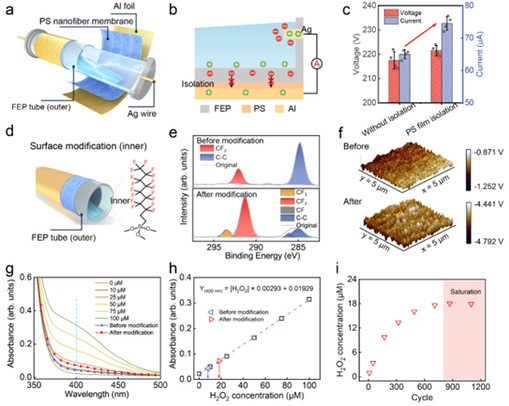
Fig. 2 Mechanisms of solid-liquid electric power generation.
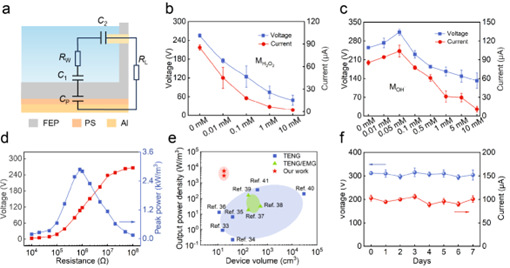
Fig. 3 Optimization of solid-liquid contact power generation.
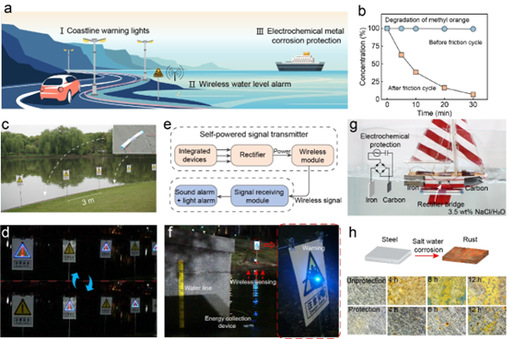
Fig. 4 Application demonstration of maritime Internet of Things.
Through proof-of-concept experiments, the research demonstrated the application potential of solid-liquid interface energy in fields such as the maritime Internet of Things. For instance, by wave energy harvesting, the HEG can potentially serve various purposes such as coastal warning lights powering, wireless water level detection, and anti-corrosion for ships. These functionalities not only highlight the significant potential of this technology in the energy and environment fields but also provide new insights for the sustainable development of green energy.