

Alkali metal batteries, characterized by high theoretical specific capacity and low reduction potentials, are highly promising next-generation energy storage systems. However, the unstable solid-electrolyte interphase (SEI) on metal negative electrodes and the vigorous growth of dendrites pose significant challenges to the practical application of them.
The research team from DHU has proposed a high-dielectric constant fiber separator primarily composed of phosphorylated cellulose (PCS for short). By introducing the dielectric constant as a descriptor, they explored the response behavior of fiber separators with different dielectric constants under electric fields and investigated the effect of a high-dielectric constant separator on the negative electrode surface of alkali metal batteries under the premise of a uniform internal electric field. The related findings were published in Nature Communications under the title Electron displacement polarization of high-dielectric constant fiber separators enhances interface stability. DHU is the first affiliation, with Tao Zhang, a PhD student from the College of Materials Science and Engineering, as the first author. The corresponding authors are Zhu Meifang and Xu Guiyin from the College of Materials Science and Engineering at DHU.
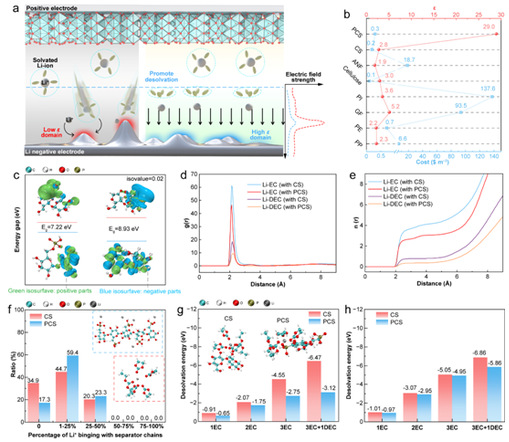
Fig. 1 Designs of separator with high-dielectric constants
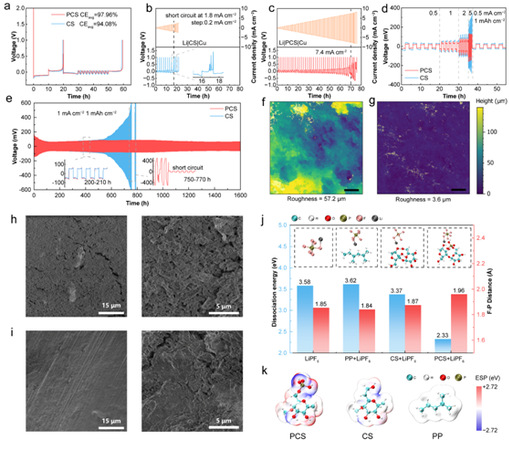
Fig. 2 The effect of PCS on the Li + deposition in metal negative electrodes
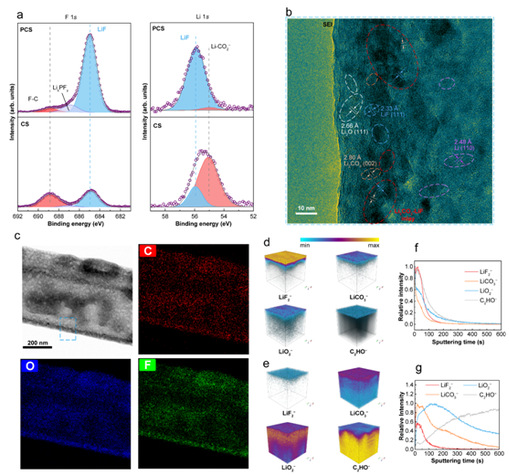
Fig. 3 Effect of separator with high-dielectric constants on SEI chemical composition
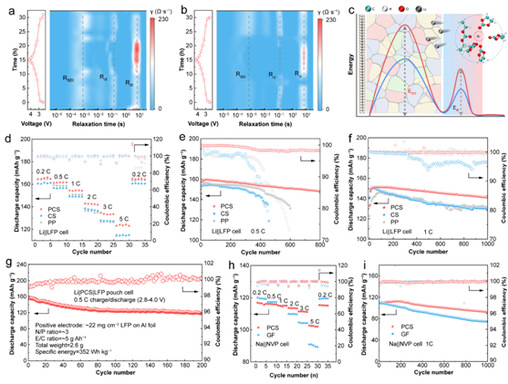
Fig. 4 Electrochemical performance of Alkali metal batteries with PCS
With the coordination of the electric field inside the battery and the high-dielectric constant separator, the team demonstrated a strategy that facilitates the reaction at the separator-negative electrode interface to construct stable alkali metal batteries. Comprehensive simulations and characterizations confirm the critical role of separators with a high dielectric constant in promoting the uniform distribution of electric field density. Furthermore, the high-dielectric constant PCS undergoes intense electron transfer under an electric field, promoting the generation of LiF and reducing the energy barrier for Li+ transport within the SEI. Benefiting from the electric field-driven electron displacement polarization, the interaction between the high-dielectric constant separator and alkali metal ions is enhanced, optimizing the solvation structure and dynamics of alkali metal ions and consequently mitigating parasitic reactions of organic solvent molecules at the SEI. Employing the prepared high-dielectric constant separator, both lithium and sodium metal batteries exhibited significantly improved cycling stability compared to cells using commercial PP or GF separators. These advancements hold significant importance for elucidating the reaction mechanisms at the separator-negative electrode interface within the complex environment of batteries.
Read the full paper: https://www.nature.com/articles/s41467-025-60256-9