

Recently, the research team led by Professor Liao Yaozu from the State Key Laboratory of Advanced Fiber Materials and the College of Materials Science and Engineering at DHU has made significant breakthroughs in the field of battery energy storage materials. Four major achievements have been published consecutively in top international journals, providing new solutions to address this pressing challenge.
Breakthrough 1
Fast charging of lithium metal batteries often leads to congestion of Li⁺ ions, resulting in performance degradation or even fire hazards. The research team has innovatively designed a hierarchical covalent organic framework-based porous separator (PAN/AM-COF), effectively creating a “3D transportation network” for Li⁺ ions.
The PAN/AM-COF includes:
Lithium-Attractive Microporous Channels: These channels function like intelligent gates, precisely selecting Li⁺ ions.
Hierarchical Interconnected Pores: This design achieves an ultra-high ionic conductivity of 3.33 mS cm⁻¹.
Thermal Stability Barrier: The separator maintains stable cycling for 300 cycles even at an elevated temperature of 100 °C.
The LiFePO4 battery equipped with this separator shows a minimal capacity decay of only 0.037% per cycle at an ultra-high rate of 30C (about 12 minutes for a full charge), providing a reliable power source for extreme applications such as low-altitude aircraft and emergency medical equipment. These related findings were published in Advanced Energy Materials (2024, 14, 2401146).
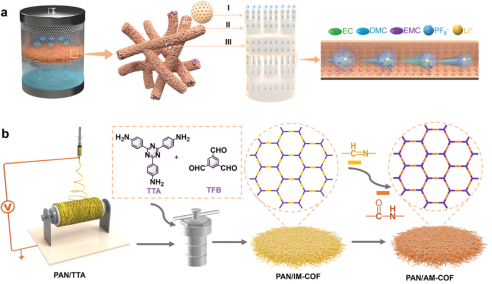
Figure 1. Fabrication and Characterization of PAN/AM-COF
Breakthrough 2
The team introduced for the first time the concept of All-Nanofibrous Covalent Organic Framework Battery (ANCB), which uses the same type of nanoporous materials to simultaneously fabricate the cathode, anode, and separator (Figure 2). This “three-in-one” design demonstrates remarkable performance: it achieves an energy density of 517 Wh/kg, approaching that of top-tier lithium batteries; a power density of 9771 W/kg, more than ten times that of conventional batteries; and ultra-fast charging in just 56 seconds under extreme current conditions. This breakthrough solves the long-standing challenge of achieving both high energy density and high-power density. The related research was published in ACS Nano (2024, 18, 29189).
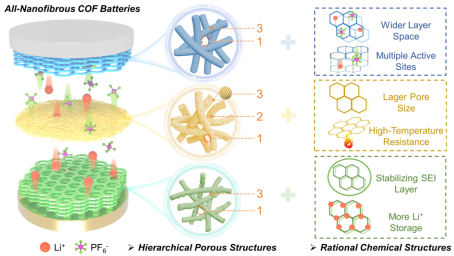
Figure 2. Concept of All-Nanofibrous COF Batteries (ANCB)
Breakthrough 3
To address the issue of slow electrode reaction kinetics, the team developed a quinoline-linked ionic covalent organic framework (iQCOF). Through precise molecular structure tuning (Figure 3), triazole ionic liquid was introduced to “trap” anions, π-bridges were constructed to enhance electron "hopping" efficiency, and the planar structure was optimized to accelerate charge flow. As a result, the material achieves an ultra-high specific capacity of 407 mAh/g. Even after 10,000 cycles at a high current density of 10 A/g, it maintains excellent energy density, making 30-second fast charging possible. This achievement was published as an Important Paper in Angewandte Chemie International Edition (2025, 202505207).
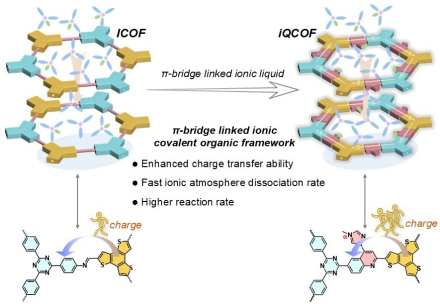
Figure 3 Design Concept of Quinoline-Linked Ionic Covalent Organic Framework
Breakthrough 4
To tackle the challenge of insufficient activity in porous electrodes, the team took an innovative approach by modifying a porphyrin polymer (PPCMP-Cu) through copper ion coordination. The introduction of copper ions (Figure 4) reshapes the electron cloud structure, narrows the band gap, and boosts the ion diffusion rate by 38 times. This results in an ultra-high energy density of 702 Wh/kg. At a current density of 5 A/g, the material enables fast charging in just 76 seconds, with a power density exceeding 12,000 W/kg. This study opens a new path for overcoming the limitations in electrode kinetics and was published in Chemical Science (2025, DOI: 10.1039/D4SC08244C).
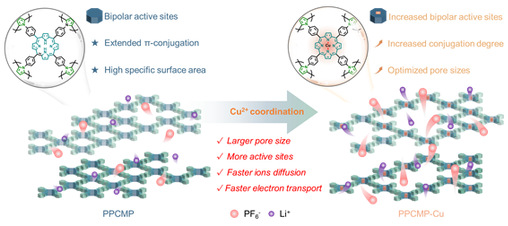
Figure 4 Conceptual Diagram of Copper-Mediated Bipolar Porphyrin-Based CMP Design
The research was completed by the College of Materials Science and Engineering and the State Key Laboratory of Advanced Fiber Materials at DHU, with support from the National Natural Science Foundation of China, among other funding sources. Currently, this series of technologies has completed laboratory validation, and the team is collaborating with industry partners to advance its industrialization.
With ongoing support from national key research and development programs, lightweight but ultra-high-energy batteries is rapidly approaching reality.