

Multi-color pixel displays hold significant potential for a wide range of applications, including adaptive camouflage, visual sensing, photonic computing, visual perception, and spectral modulation. Achieving multi-color modulation by combining electrochromic (EC) technology with Fabry–Pérot (FP) optical resonance to enhance light–matter interactions represents a key technological direction for realizing multi-color pixel displays. Among candidate materials, poly(3,4-ethylenedioxythiophene):poly(styrene sulfonate) (PEDOT:PSS), renowned for its high mechanical flexibility, excellent film-forming properties, and rapid switching response, stands out as a highly promising electrochromic material. However, conventional methods fall short in effectively tuning the optical dielectric properties of PEDOT, limiting its application in Fabry–Pérot resonator structures.
Recently, the research team led by Professors Wang Hongzhi and Li Kerui at DHU developed a novel post-treatment method for PEDOT:PSS by introducing polyoxometalates (POMs) through simple solution mixing and stirring. This method enables liquid-phase electrochemically autooxidized doping (EAOD) of PEDOT (Fig. 1), significantly modifying its optoelectronic properties. The related research findings has been published in Nano Letters under the title “Liquid-Phase Electrochemically Autooxidized Doping of PEDOT Enabling Fabry–Pérot Electrochromic Pixels.”
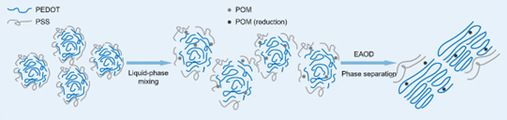
Figure 1. Simultaneous deep doping and phase separation of PEDOT:PSS induced by liquid-phase electrochemical autooxidization.
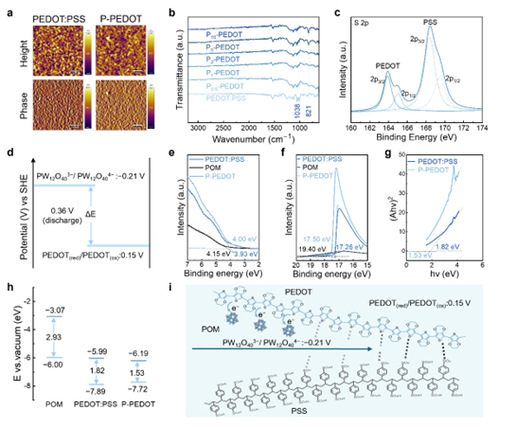
Figure 2. Structural and energy-level characterization of P-PEDOT
The EAOD approach effectively reduces the bandgap of PEDOT and significantly enhances its electrical conductivity (from 1.03 to 360 S cm⁻¹). It also enables effective modulation of the refractive index and extinction coefficient.
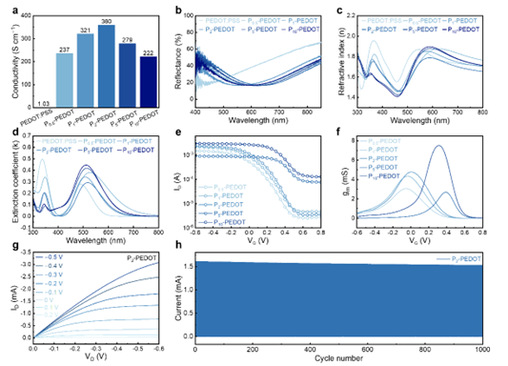
Figure 3. Analysis of the optoelectronic properties of P-PEDOT.
The resulting POM-doped autooxidized PEDOT (P-PEDOT) significantly enhanced the optical resonance capability of the Fabry–Pérot cavity, expanding PEDOT's initial blue state into a wide color gamut.
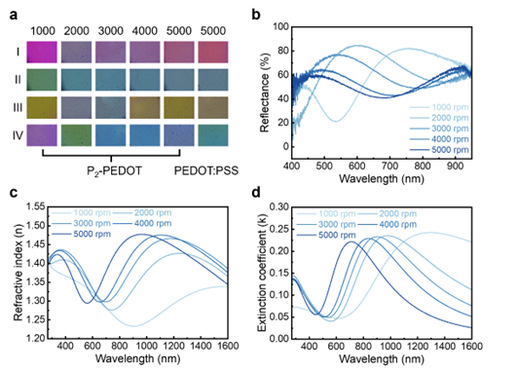
Figure 4. Multi-color films based on P-PEDOT and their optical characteristics.
Multi-color tuning capability was demonstrated using a 100-pixel array. Furthermore, organic electrochemical transistors (OECTs) based on P-PEDOT achieved an on/off ratio of 1000 and maintained 94.4% stability after 1000 cycles. Color changes in the electrochromic array pixels (1 mm × 1 mm) could be controlled by a low gate voltage of only ±0.8 V.
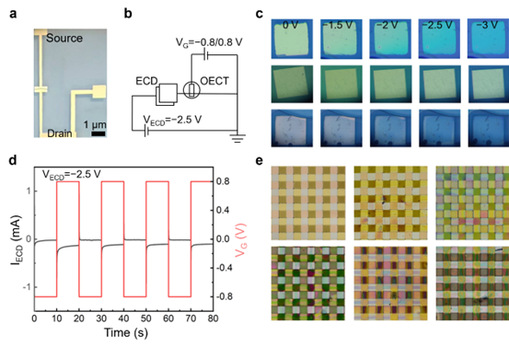
Figure 5. OECT-driven EC pixels and multi-color resonant cavity array demonstration.
In summary, the team employed a synergistic strategy of EAOD and phase separation to lower the bandgap of PEDOT, thereby markedly enhancing its electrical conductivity. This material demonstrates significant application potential in fields such as EC displays, biosensing, health monitoring, and color display technologies.
Full text available at: https://pubs.acs.org/doi/10.1021/acs.nanolett.5c00604