The Global Forum on Green Capacity Cooperation and Industry–Education Integration in the Textile Sector convened at Donghua University (DHU) from November 3 to 5. Guided by the United Nations Industrial Development Organization (UNIDO), the China National Textile and Apparel Council (CNTAC), and the World Trade Organization (WTO), the event was co-hosted by DHU and the China Textile and Apparel Education Society (CTAES). Under the theme “Global Partnership for a Sustainable Textile Future,” the forum brought together experts, scholars, and industry leaders from 21 countries including China, the United Kingdom, Germany, Italy, Pakistan, Uzbekistan, and South Africa.
DHU President Xiang Yanxun attended the opening ceremony and delivered welcoming remarks. Other distinguished speakers included Zhao Zhen, Deputy Director of the Shanghai Municipal Education Commission; Xu Yingxin, Deputy Secretary-General of CNTAC; and Ji Xiaofeng, President of CTAES. The ceremony was moderated by Chen Ge, Vice President of DHU.

(President Xiang Yanxun delivers a speech)
In his address, President Xiang expressed appreciation for the strong support from UNIDO, WTO, and global partner institutions. He emphasized that enhancing green capacity and deepening industry–education integration are vital to steering the global textile sector toward a low-carbon, innovation-driven, and inclusive future aligned with the United Nations Sustainable Development Goals (SDGs).
Xiang highlighted DHU’s achievements in green, low-carbon, and smart textile innovation, as well as its active role in international collaboration. He called for strengthened cooperation in green textile technologies, joint development of industry standards, and the cultivation of high-level talent to build an open and mutually beneficial global textile education ecosystem.
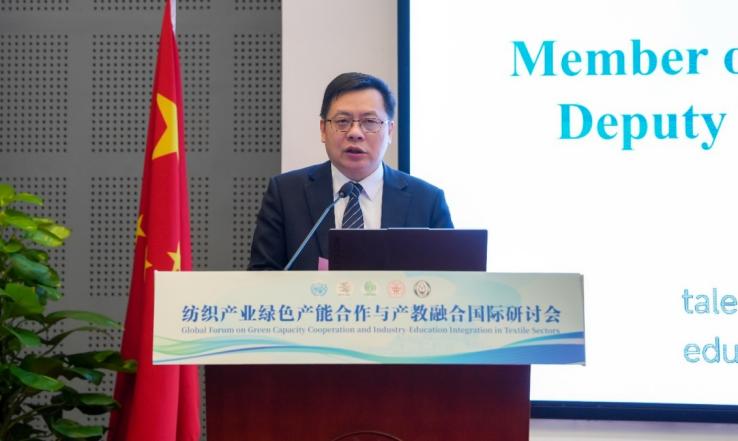
(Zhao Zhen delivers a speech)
Representing the Shanghai Municipal Education Commission, Zhao Zhen underscored the mounting challenges posed by global industrial chain restructuring and competition in green development. He stressed that high-quality growth hinges on scientific innovation and talent development, supported by the deep integration of education, industry, and innovation chains. Shanghai, he noted, is accelerating reforms that empower universities to explore new models of cooperation and contribute to the digital transformation of the textile industry and the building of a community with a shared future for humanity.
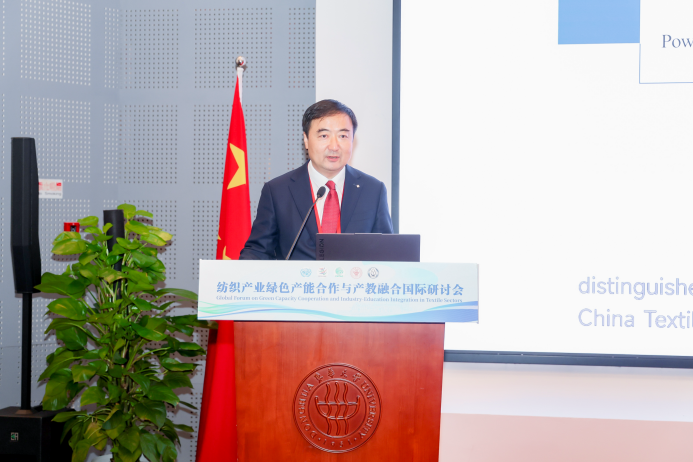
(Ji Xiaofeng delivers a keynote report)
In a keynote report, Ji Xiaofeng outlined the strengths of China’s textile and apparel education system, which has built a comprehensive talent development pipeline aligned closely with industry needs. He highlighted the sector’s commitment not only to meeting industrial demands but also to preserving traditional culture and protecting intangible heritage. Looking ahead, Ji called for further reforms to nurture talent for national modernization and to expand cross-border cooperation in textile higher education.
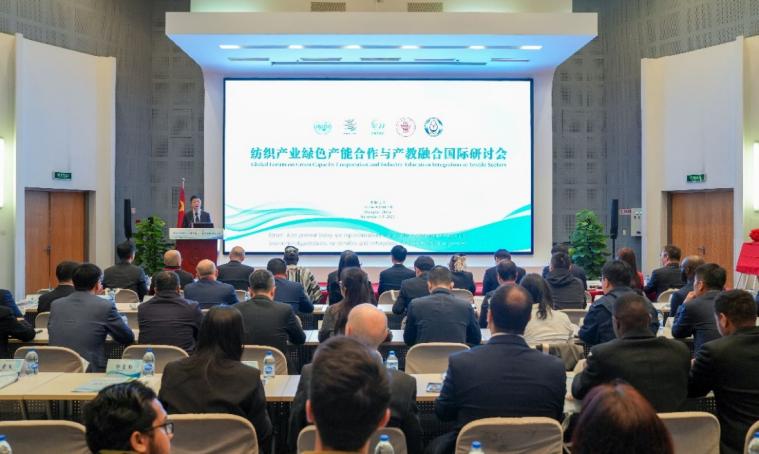
(The conference in session)
The forum also featured insights from international representatives including Gomina Mama, Director of the Foreign Trade Division of Benin; Frank Van Rompaey, UNIDO Representative; and Ruby Saakor Tetteh from the Embassy of Ghana in China. Their contributions addressed global textile industry transformation, green manufacturing, and pathways toward sustainable and inclusive growth.
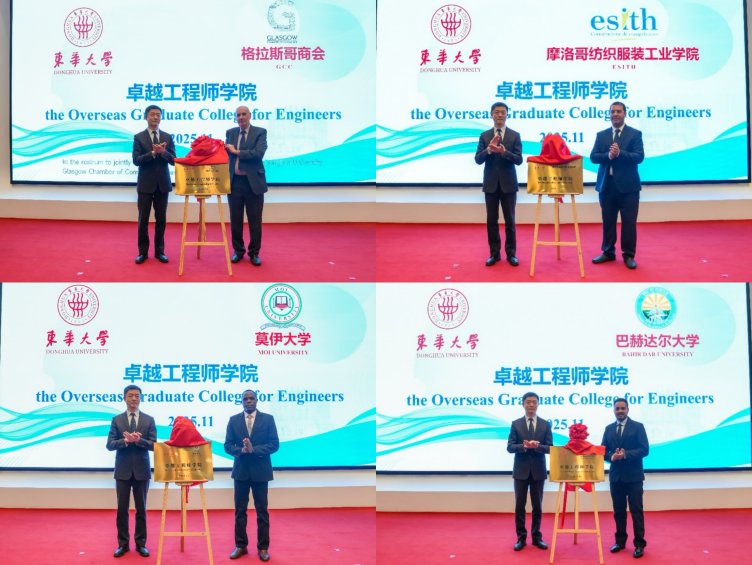
(Inauguration of Overseas Graduate College for Engineering)
A major milestone of the event was the inauguration of the Overseas Graduate College for Engineering, jointly established by DHU and partner institutions including the Glasgow Chamber of Commerce (Scotland), Ecole Supérieure des Industries du Textile et de l’Habillement (ESITH) in Morocco, Moi University (Kenya), and Bahir Dar University (Ethiopia). The new college aims to build an international platform for engineering excellence and share China’s successful experiences in training high-level engineering talent.
DHU also signed cooperation agreements with China National Machinery Industry Corporation (SINOMACH) and China General Technology (Group) Holding Co., Ltd. (GENERTEC) to jointly cultivate engineering talent through an integrated Industry–University–Research–Application model.
The forum additionally hosted closed-door meetings and multilateral dialogues, including the Steering Board Meeting of the World Textile Universities Alliance, the Industry-Education Integration and International Cooperation in Industry-University-Research Seminar, the Annual Meeting of the World Textile, and the DHU Green Textile Industry-University-Research Achievement Exhibition.
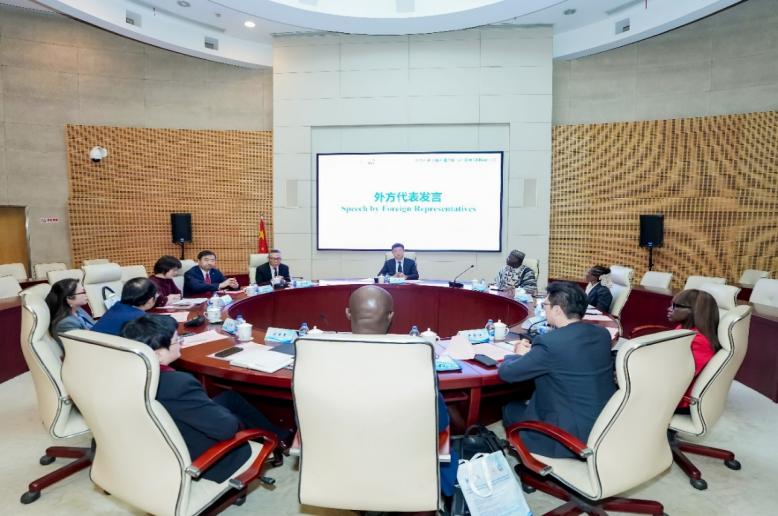
(Multilateral Dialogue at Global Forum on Green Capacity Cooperation and Industry-Education Integration in Textile Sector)
During the alliance meeting, members discussed reforms to its working mechanisms and future development strategies, focusing on themes such as “Promoting Global Collaboration in Higher Textile Education” and “Advancing Global Industry–Education Integration.” The dialogue aimed to strengthen global networks in textile higher education, facilitate international transfer of green technologies, and foster new cooperation models that support sustainable development across the textile supply chain.