Donghua University’s Shanghai International Fashion & Technology Innovation Center, together with Guizhou Textile Group and Li-Ning Group, has officially unveiled the uniforms—dubbed the “battle gear”—for the Guizhou Delegation of the 15th National Games. More than a product launch, the collaboration showcases a new model of universities energizing local industries through design, blending ethnic intangible cultural heritage (ICH) with contemporary fashion to fuel high-quality transformation across Guizhou’s textile sector.
The new uniforms marry modern sports technology with the deep cultural memory of Guizhou’s ethnic groups. Their color palette—vibrant red for fighting spirit, pure white for fairness, and indigo blue for endurance—draws directly from ethnic aesthetics. A highlight is the sophisticated reinterpretation of batik, a national-level ICH craft. “Sun patterns” and “bird patterns” are woven into the waist and cuffs: the sun motif channels light and vitality, echoing hopes for athletes to unlock their full potential, while the bird motif, inspired by Miao mythology, symbolizes freedom and blessings, encouraging athletes to embody the Olympic ideal of “Faster, Higher, Stronger.” Designed as a serialized, multi-category sportswear collection, the garments meet year-round outdoor training needs with professional performance features, achieving a seamless blend of cultural expression, craftsmanship, and athletic functionality.

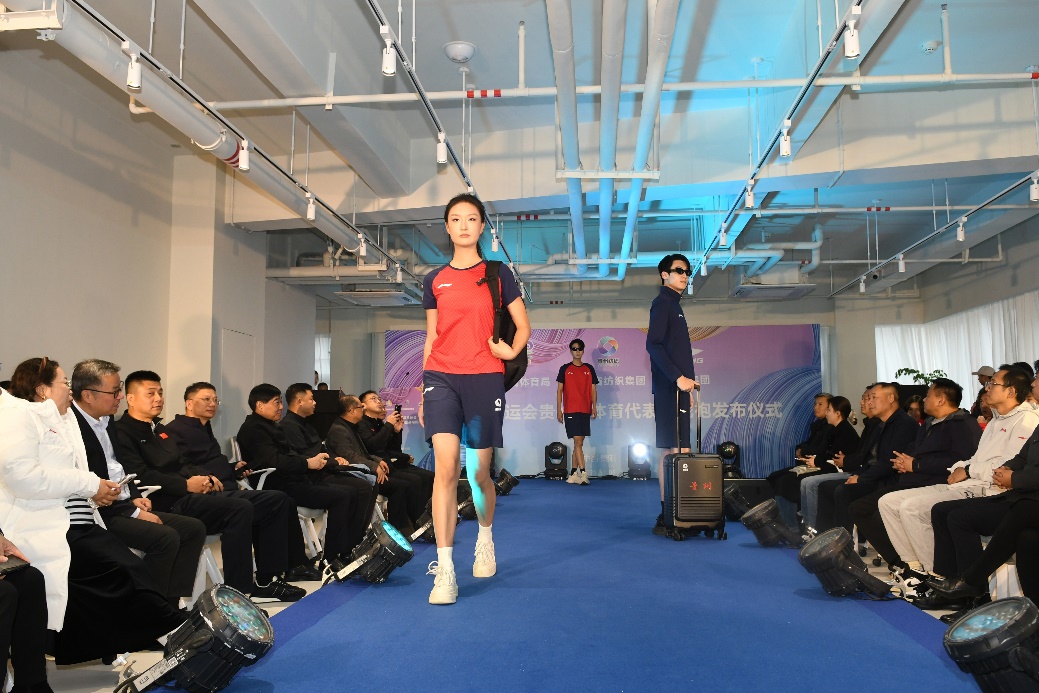
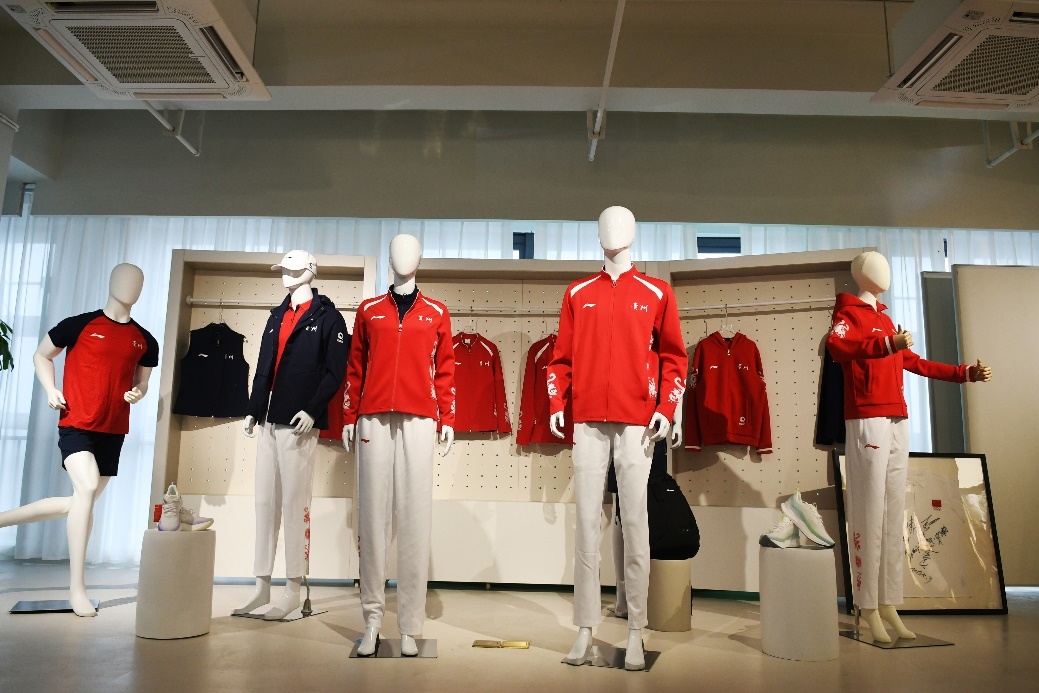
(Launch Ceremony for the Guizhou Delegation’s Uniforms at the 15th National Games)
The launch ceremony took place at the jointly established “Splendid Guizhou: Textile Elegance” Exhibition Center, a space fully planned, designed, and curated by Donghua University’s team. The venue has grown into a comprehensive platform that showcases industrial vitality while bridging ethnic culture with contemporary fashion. With “thread” as its spirit and “weaving” as its structural logic, the center is built around the concept of “the myriad possibilities of a single thread,” shaping a perceptible, immersive, and communicable cultural space. Visually, the center adopts “textile rhythm patterns”—extracted from the movement of silk threads—as its core symbol, blending in signature local colors such as cloud-yarn gray, batik blue, and Miao cotton red. Its IP mascot, “Zhi Xiaoqian,” serves as a cultural ambassador, enhancing audience engagement and interaction.
The exhibition center is organized into six narrative zones: the Foyer, Group Pavilion, Cultural Pavilion, Fashion Pavilion, Scenario Pavilion, and Exhibition Hall. Among them, the Cultural Pavilion showcases Guizhou’s top ten characteristic crafts, including seven national and three provincial intangible cultural heritage items. It presents the full lineage of ICH from inheritance to contemporary innovation through physical embroidery pieces, traditional ethnic costumes, waist-loom installations, live demonstrations by embroiderers, and three thematic clusters of innovative design: “Intelligent Digital,” “Guochao Miao Silver,” and “Life Aesthetics.” The Fashion Pavilion underscores the creative dialogue between Miao embroidery and modern fashion, while the Scenario Pavilion offers an immersive apparel experience through six themed real-life settings, bringing Guizhou’s cultural creativity into a contemporary lifestyle context.
This collaboration weaves together Donghua University’s strengths in design, technology, and cultural communication with Guizhou’s rich ethnic heritage and industrial foundation. As both sides continue to use textiles as a cultural and developmental bridge, they aim to connect Guizhou’s natural beauty and cultural depth with the momentum of the times, contributing new insight and creative power to the ongoing story of Guizhou and to the global telling of Chinese narratives.